Empower Impact Kenya CBO logo Empower Impact Kenya CBOUnity • Opportunity • Progress
Our Roots

Riwruok e Teko — Unity Is Strength

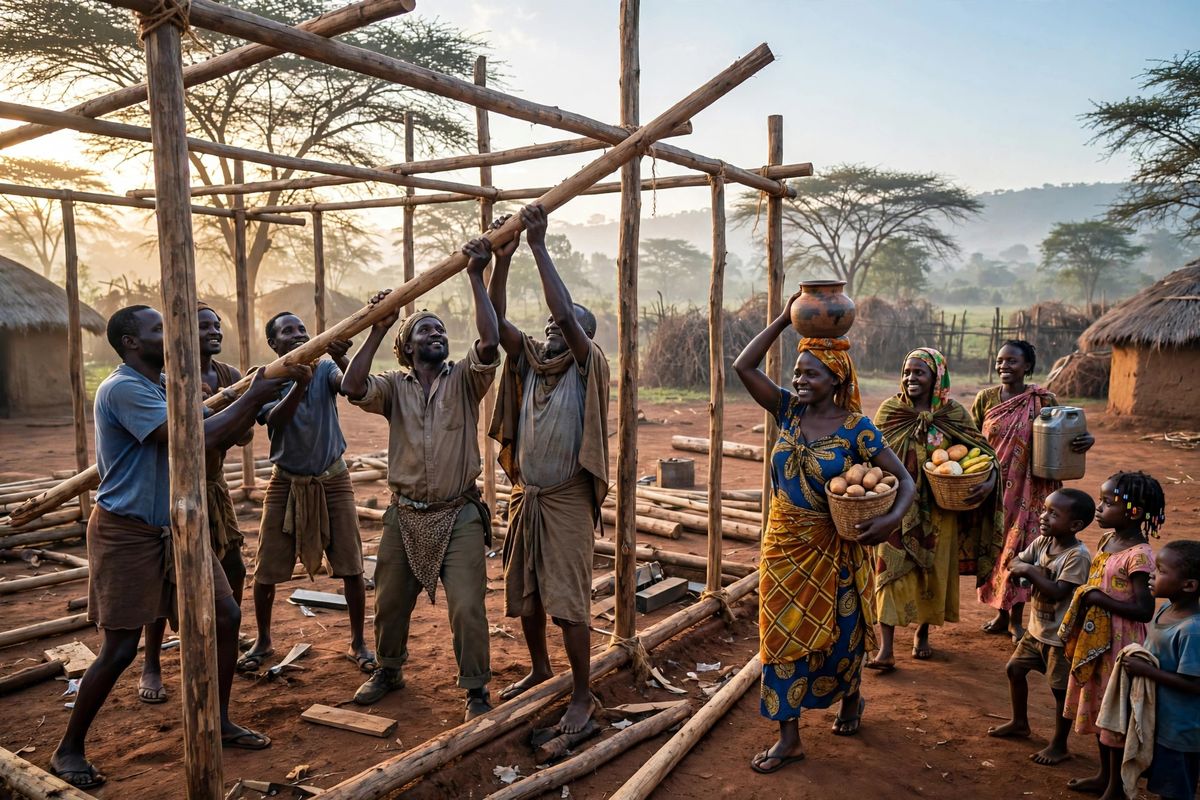
The village raising a home together at dawn

People sometimes ask what Empower Impact Kenya CBO is bringing to Nyangweso. The honest answer is: nothing new. We are not bringing togetherness to this community. We are remembering it — together.

These are the Roots Stories: stories of how this community lived when it lived together, told the way the elders tell them. They are the soil everything else we build stands in — the well, the chicken houses, the Center. Read them slowly. Then ask your grandfather how it was when he was young — and tell us, because we are collecting the village’s own stories too.

Read the stories on Wattpad

The CBO Is Only the Vessel

We are a lake people. We know what a boat is for. A boat is not the destination — a boat is judged by where it carries you.

So hear this plainly: Empower Impact Kenya CBO is only the vessel. The well is not the point. The chickens are not the point. The buildings are not the point. They are the oars, the sail, the pushing pole.

The point is the journey home — back to our roots. Back to konyir. Back to the shared pot. Back to riwruok e teko. Back to trusting each other the way our grandfathers did.

The vessel matters only because the shore matters. And the shore is us — one people, together again.

These Are Our Roots

Jo Nyangweso — listen.

These are our roots. This is our heritage. And these roots are deep — deeper than the troubles of today.

Yes, we have been hurt. Bad leadership has eaten our trust. A man now looks at his neighbor and first, he calculates. A woman hears a promise and first, she doubts. Fear has entered where trust used to live.

But hear us well: a few leaders failing does not mean a people has failed. The head can be sick and the body still strong. We will not let the wrongs of a few leaders teach us to fear each other. That is not who we are.

We are the people of konyir — when one builds, all build. We are the people of the shared pot — nobody eats alone. We are the people who say riwruok e teko — unity is strength — and we have said it for a hundred years.

So let the fear end with us. Let us trust each other again — not because any leader told us to, but because our grandfathers showed us how, and their blood is still in us.

These are our roots. And roots do not die. They only wait for rain.

Riwruok e teko.

Riwruok e Teko

“Unity is strength” — our own proverb, and the motto the Luo Union carried for nearly sixty years. What we cannot do alone, we can do together.

Konyir

The old work party: when a house had to rise or a harvest had to come in, the village came. No wages — a debt of honor, paid in hands.

The Shared Pot

Nobody ate alone while a neighbor went hungry. The pot was big because the circle was big. That was not charity; that was family.

Go Deeper — Our Heritage

These stories carry the heart of the old way. Our Heritage page carries its record: the homestead as the elders built it, the proverbs as they were collected, the lake as it was fished, the tales as they were told — gathered from documented sources and the recorded words of the elders themselves.

Read Our Heritage →
Villagers raising the frame of a new home together at dawn

1. The House That Rose in Three Days

Konyir — the work party — and the debt of honor that paid for everything.

Ochieng was a young man with new land, a wife, and a baby on the way. He was strong, and he was proud, and for one whole month he worked alone. He cut poles alone. He dug holes alone. By the end of the month he had two corners of a house standing, a bad back, and a field laughing at him.

His grandfather watched him for a long time before he spoke. “You are building like a stranger,” the old man said. “In this village, a man does not build his house. The village builds it. Announce it.”

So the word went out, the way the word always went out: by mouth, by path, by neighbor telling neighbor.

They came at dawn. Thirty men, and behind them the women with firewood, water, and the great pots. By the time the sun stood straight up, the frame of the house stood straight up too. The women cooked kuon and porridge for everyone, and the children carried water and sang the workers’ songs they were not yet old enough to work to. On the second day the walls rose. On the third day the roof went on, and that night Ochieng’s family slept under it, and the whole village feasted in the new house until the fire burned low.

Then Ochieng did what a grateful man does. He took out his money and tried to pay the lead elder.

The old man looked at the money the way a man looks at a stone in his food. “Put that away,” he said. “You will pay us. When Onyango’s son builds, your hands will be on his poles before the sun is up. When the widow’s fence falls, you will already be mending it before she asks. When the harvest is heavy at your brother’s shamba, your back will be in his field. That is the price. You will pay it all your life — and so will we. That is how nobody here is ever alone with a heavy thing.”

The house stood for forty years. But the house was never the real building.

The real building was a people who owed each other their hands — and paid gladly. Nobody in that village was rich in money. And nobody in that village was poor in help.

That village is still in us. It is time to build like it again.
↑ Back to the list

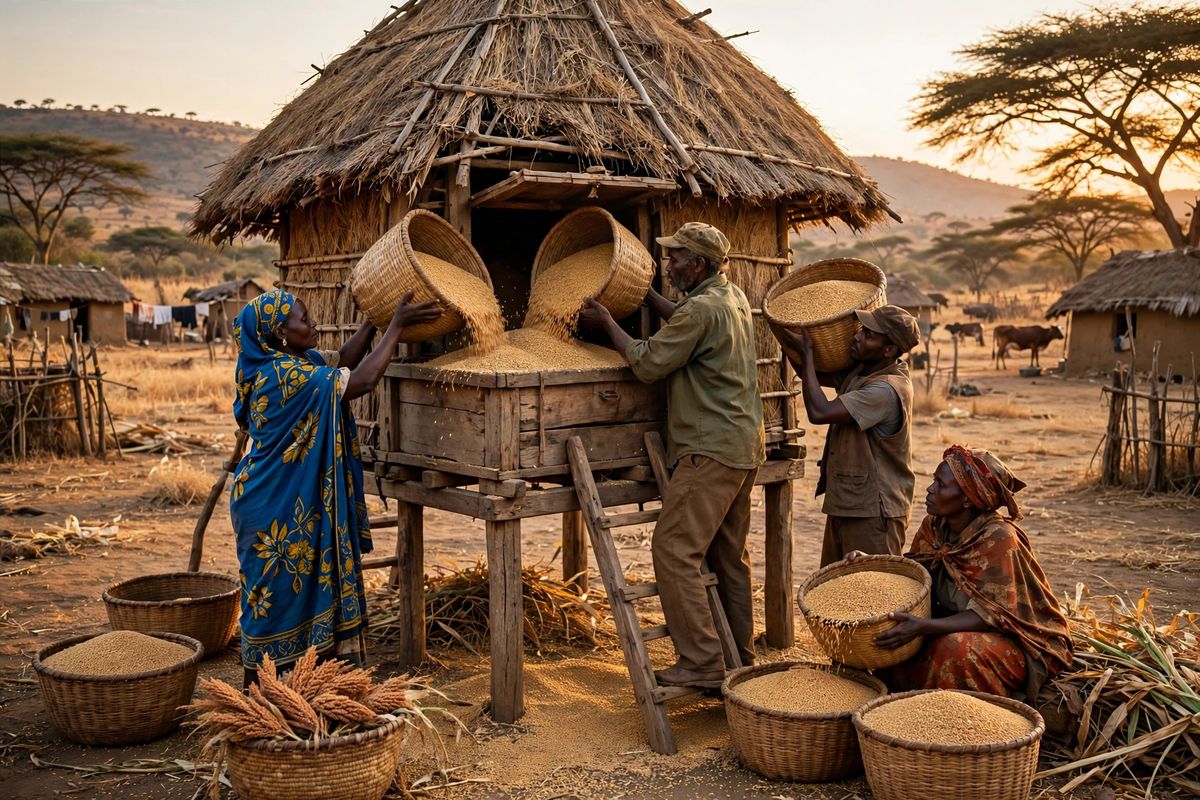
Villagers pouring baskets of grain into the village granary

2. The Granary That Never Emptied

The common store — a village that fills together in the fat season eats in the lean one.

The year the rains were generous, the harvest came in like a river. Every family’s store was full, and still the fields gave more.

That was when the elders called for the village granary to be filled. From every house, baskets were carried — one basket, two baskets, according to what each family had — and poured into the common store that stood at the center of the village, under the eyes of everyone.

Not every heart was glad. Odhiambo, whose own harvest had been the biggest, carried his baskets slowly. “My sweat filled these,” he said to his wife. “Why does my grain sleep in another man’s store?”

The next year, the rains played with the village and then forgot it. Field after field cracked. One by one, the family stores emptied — Odhiambo’s too, though his had been the fullest. When his last basket was scraped, his wife said nothing. She just looked at him, and he walked to the center of the village with his head down.

The elders opened the common granary the way it had always been opened: in the open, measured in the open, the same measure for every house — the elder’s house, the widow’s house, and Odhiambo’s house. His children ate from the village store until the new harvest stood green.

At the next filling, nobody carried his baskets faster than Odhiambo. And when a young man grumbled beside him, the way he himself had once grumbled, Odhiambo answered him the way the old ones had answered no one, because he had needed to learn it from hunger:

“A basket you keep alone feeds you once. A basket you give to the village feeds you all your life — because the village does not forget, and the village does not run out the way a single store runs out.”

A full granary was never one family’s. That is why it was never empty.

↑ Back to the list

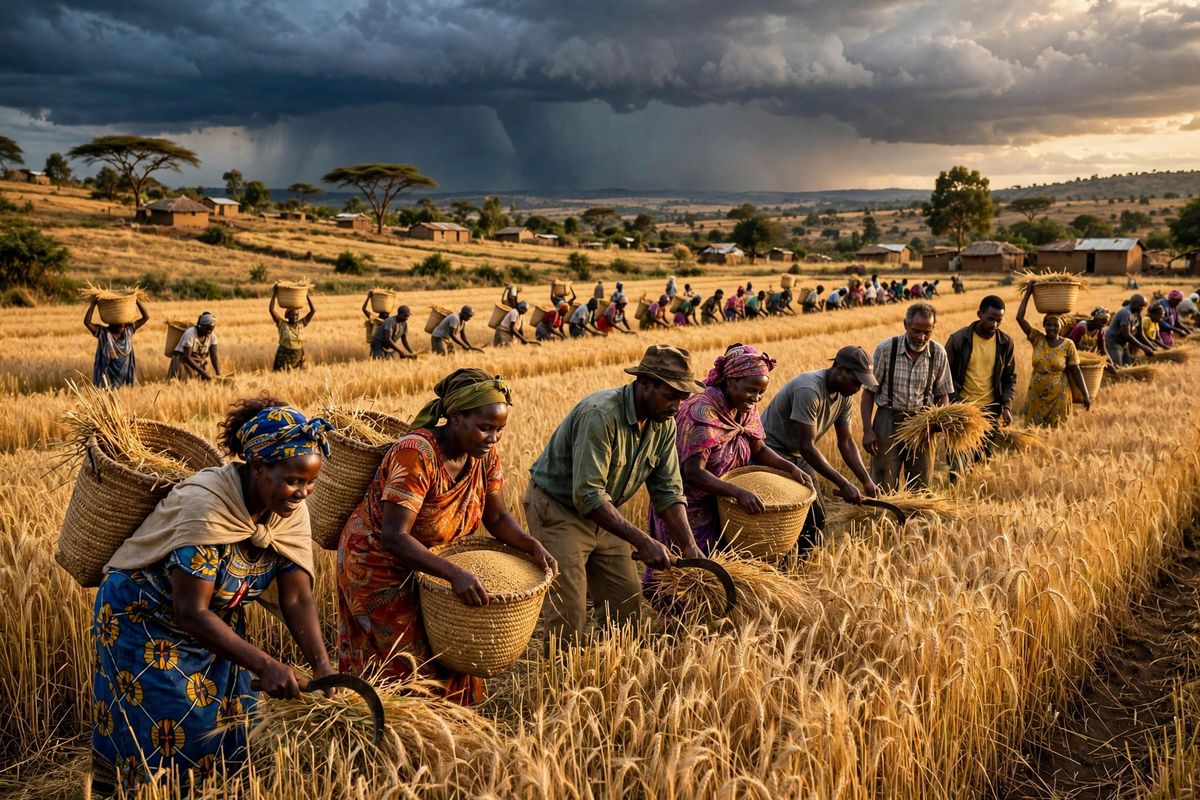
The whole village harvesting a golden field together as storm clouds gather

3. The Widow’s Field Was Harvested First

Receiving is a season, not a shame — the line does not forget a house.

Atieno’s husband died in the season when the grain stood tall and heavy — the worst season of all to lose the man of the house, because the harvest does not wait for grief.

The clouds were already gathering their strength over the hills. Every man in the village was looking at his own field and doing the same hard arithmetic: two more days and mine is in; three, and the rain may take it.

That evening the elders sat, and their ruling was short: Atieno’s field first. Before any man’s own. All hands, at dawn.

A young farmer spoke what several were thinking. “And if the rain takes my grain while I am harvesting hers?”

The oldest elder did not raise his voice. “Her husband stood in the konyir line for thirty years,” he said. “His hands are in half the houses of this village. The line does not forget a man — and it does not forget his house. Tomorrow we harvest as one field. The rain can do what it wants.”

They harvested her field in a single day, the whole village moving down the rows like one animal, the women singing the harvest songs, her grain carried to her store by other people’s sons. That night the rain came down like a roof falling — and yes, it spoiled the edges of some men’s late fields. Nobody starved. And nobody in the village, then or ever after, called Atieno a beggar. She had not begged. She had received what thirty years of her house’s hands had built: her turn.

Years later, when the konyir gathered, the first backs in the line — the strongest, the earliest, the last to rest — were Atieno’s sons. They had eaten from the line when they were small. Now they were the line.

In a village that stands together, nobody is a beggar. Everybody is a member whose turn has come.

↑ Back to the list

A hand pump filling a yellow jerrican with clean water

4. The Well the Village Dug

Water found by many hands belongs to all hands.

In the dry year, the spring shrank to a brown eye of water, and the women of the village walked farther and farther with their pots, and came home later and later, and the children’s baths became a memory people joked about so they would not weep about it.

The elders walked the low ground beyond the grazing field, where the grass stayed green longest, and the oldest of them pushed his staff into the earth and said what the old ones had always said: “Water sleeps here. It is only waiting to be woken by people who agree.”

So the village dug. Not a rich man’s hired gang — the village. Each family sent hands, and the hands worked in turns: diggers below passing earth up in baskets, a rope line of grandfathers and boys, women with porridge and water for the workers — the little water they had, carried far, spent gladly on the digging of more.

There were scoffers. There always are. “Water comes where water wants,” they said from the shade. “You are digging a grave for your own sweat.” The diggers answered them with the song the rope line sang, and dug on.

Sand. Then clay, hard as a pot. Then — on the ninth day — earth that came up dark and cool and smelling of rain. And the next morning there was water standing in the bottom of the hole, shy as a guest, and by evening it stood waist-deep and clear.

The first cup drawn was not drunk by the strongest digger or the richest elder. It was carried, by the whole singing village, to the oldest grandmother, who poured a little on the ground — “for those who taught us to dig together” — and drank, and wept, and laughed, in that order.

That well never had a lock, and it never had an owner. It had something better: it had everybody’s hands in it. A thing the whole village builds, the whole village guards.

Nyangweso is digging again. When the water flows, it will belong to everyone — because everyone’s hands are in it.

↑ Back to the list

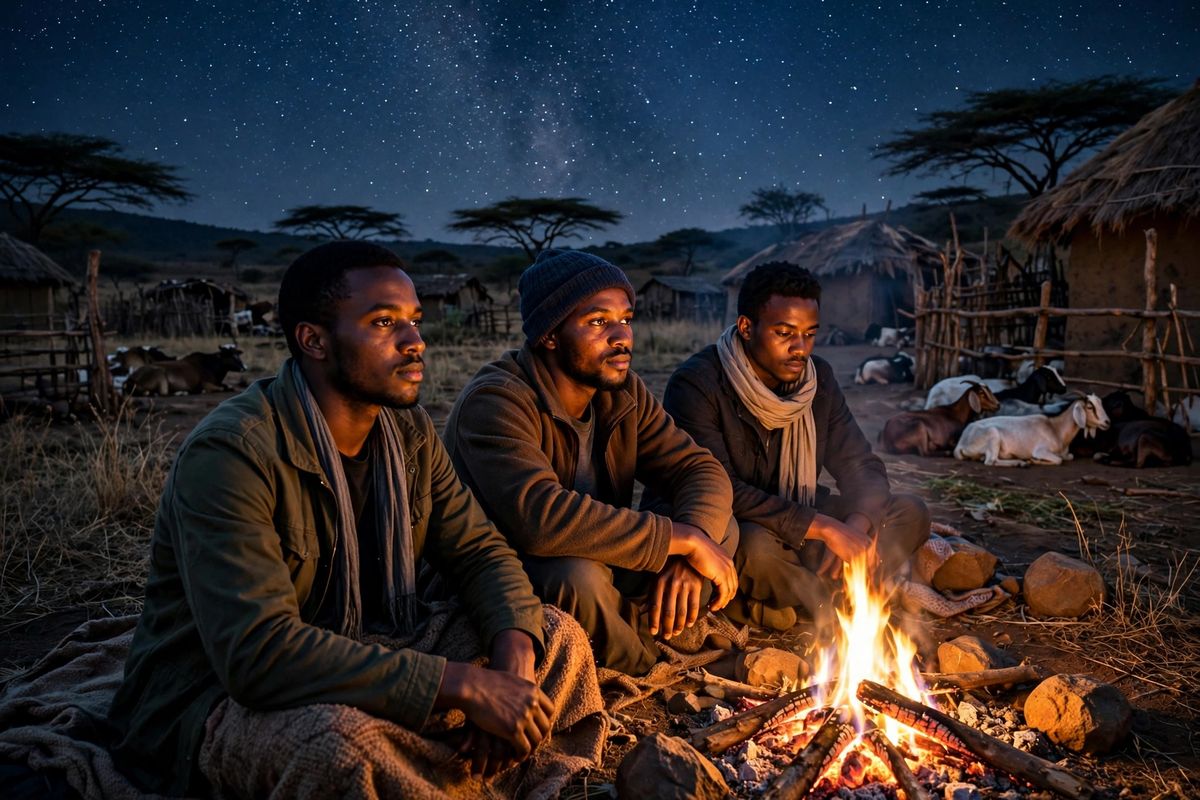
Young men keeping the night watch around a fire, guarding the village

5. The Night Watch

Somebody stays awake for everybody — the young men’s honor.

In the season when the leopard came down from the rocks, the village did not sleep the way it had slept before.

The elders arranged the watch the way it had always been arranged: fires at the paths, and the men and the older boys in turns through the night — two hours awake while the village slept, then waking the next pair with a hand on the shoulder and the same words: “The night is yours now. Keep it well.”

Young Odongo, on his first watch, asked the old watchman the question every young man asks. “We lose our sleep, and nobody pays us. The goats we guard are not even ours. Why do we do it?”

The old man poked the fire. “Tonight, you watch Onyango’s goats, and the children in the house of Achieng, and the grain in the store of a widow you barely know. Tomorrow night, other men watch yours. That is the whole of it. A village sleeps safely because somebody stays awake for everybody. The leopard is not afraid of one man, boy. But a village that watches together? The leopard has already decided to hunt somewhere else.”

Twice that season the watch’s fires and shouting turned the leopard away, and not one goat was taken, and not one child’s sleep was broken by fear. And when the season passed, Odongo did not give up his place in the rotation. He had discovered the secret the old men keep: the watch is not a burden the village puts on its young men. It is an honor the village trusts them with. To be given the night watch was to be told: you are now one of the pillars this house rests on.

Somebody stays awake for everybody. That has always been the young men’s honor — and it still is.

↑ Back to the list

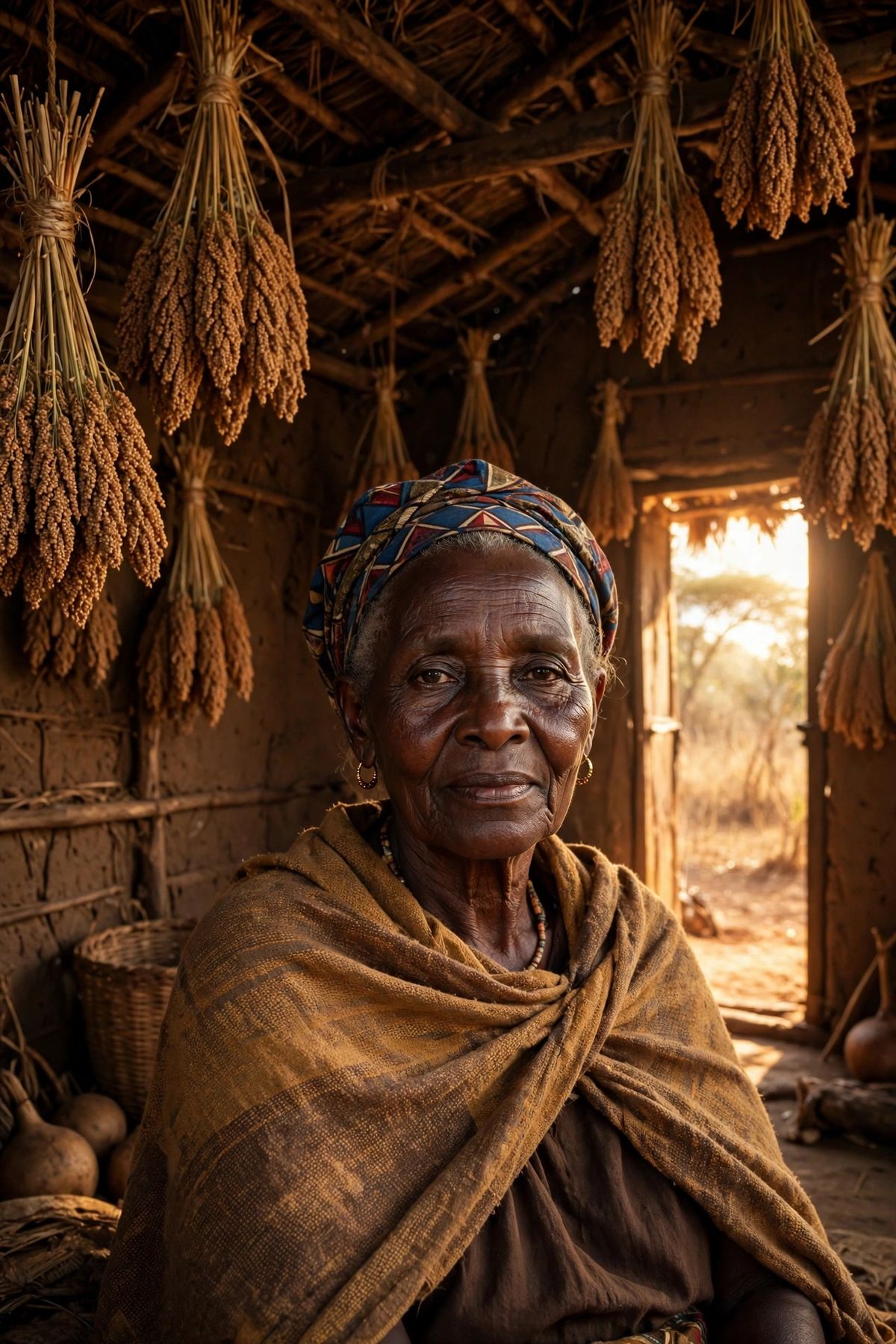
The seed keeper beneath bundles of seed grain hanging in her roof

6. The Seed Keeper

The gift that keeps moving — seed is planted and passed on, never eaten.

In the roof of Mama Awino’s house hung the best of the village: the fullest heads of grain from every family’s harvest, tied in bundles, kept dry and safe above the smoke. She was the seed keeper, as her mother had been before her.

At planting time, her door was the busiest in the village. Whoever’s seed had failed, or been eaten by weevils, or been sold in a hungry month to pay a debt, came to her — and left with seed. She kept no book and charged no interest. There was only one rule, and everybody knew it:

“From your harvest, bring back seed for the store. And once in the season, lend your hands to somebody else’s field. That is all.”

A young man who had grown clever in the town asked her the town’s question. “Mama, you lend to everyone and take nothing. All these years — why have you never grown rich from it?”

The old woman laughed until the bundles shook in her roof.

“Never grown rich? Boy, look out of my door. Every field in this village is partly mine — my seed is standing in all of them — and I never have to weed a single one. When my own planting was late the year my husband died, whose hands came? Everybody’s. I do not keep seed in my roof, child. I keep the village in my roof. The seed is only how it travels.”

She was right, and the village knew it: her store had carried them through two droughts, and not one family had ever failed to plant because they had nothing to plant with. The seed was never eaten in her house. It was planted, and harvested, and returned, and lent again — growing bigger every time it moved.

A gift that is eaten ends. A gift that is planted and passed on never ends. That is the oldest banking this village ever had.

↑ Back to the list

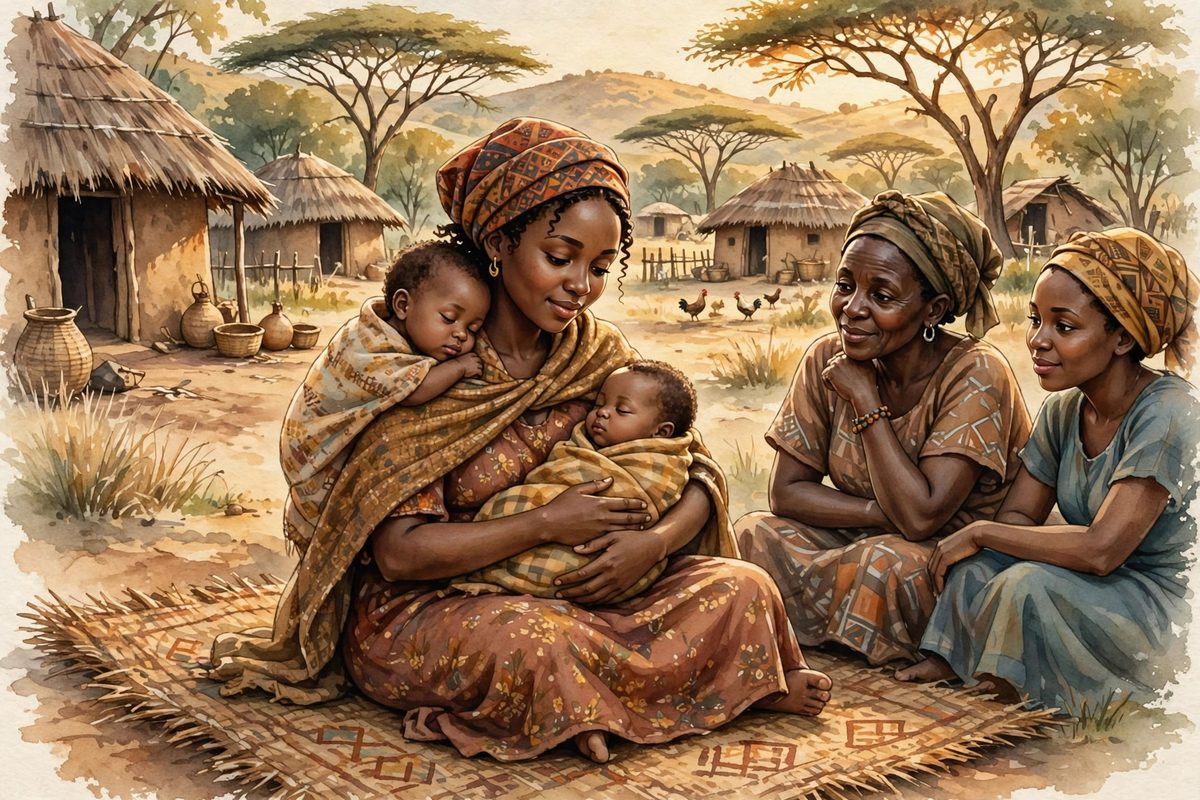
A mother holding two babies while the neighboring women look on with love

7. The Child With Two Mothers

A child who loses a mother does not become an orphan — he becomes everybody’s.

Adhiambo died in the night her baby was born, and by morning the village had two sorrows: a grave to dig, and a newborn with no breast to feed him.

In the next homestead, Atieno was nursing a daughter of three months. She heard the wailing from the funeral house, and she did not wait to be asked. She walked across with her own baby on one arm, sat down in the mourning house, and took the motherless boy to her other breast — in front of everybody, the way a thing is done when it is simply true.

“This one will not cry for milk in a village full of mothers,” she said.

So the boy grew up rich in a way money cannot count. He had his father’s house, and he had Atieno’s house. He called her Mama, and nobody corrected him, because everybody knew the arithmetic of the old village: a child who loses a mother does not become an orphan. He becomes everybody’s.

Years passed. The boy became a man, tall, with his dead mother’s eyes. And in the season the konyir went round the village raising roofs, the elders watched him pass his own father’s leaking roof and climb first onto the house of an old woman whose fire smoked thin — Atieno’s. They teased him at the evening fire: “Your own father’s roof waits, and you climb first for a woman who is not your blood?”

He answered without stopping his work: “My mother gave me life for one day. This one gave it to me every day after. A debt of milk is paid in roofs.”

That night Atieno slept under a new roof, dry, while the rain tested it and failed.

In the old way, nobody asked whose child it was. He was the village’s child — and the village was his.

↑ Back to the list

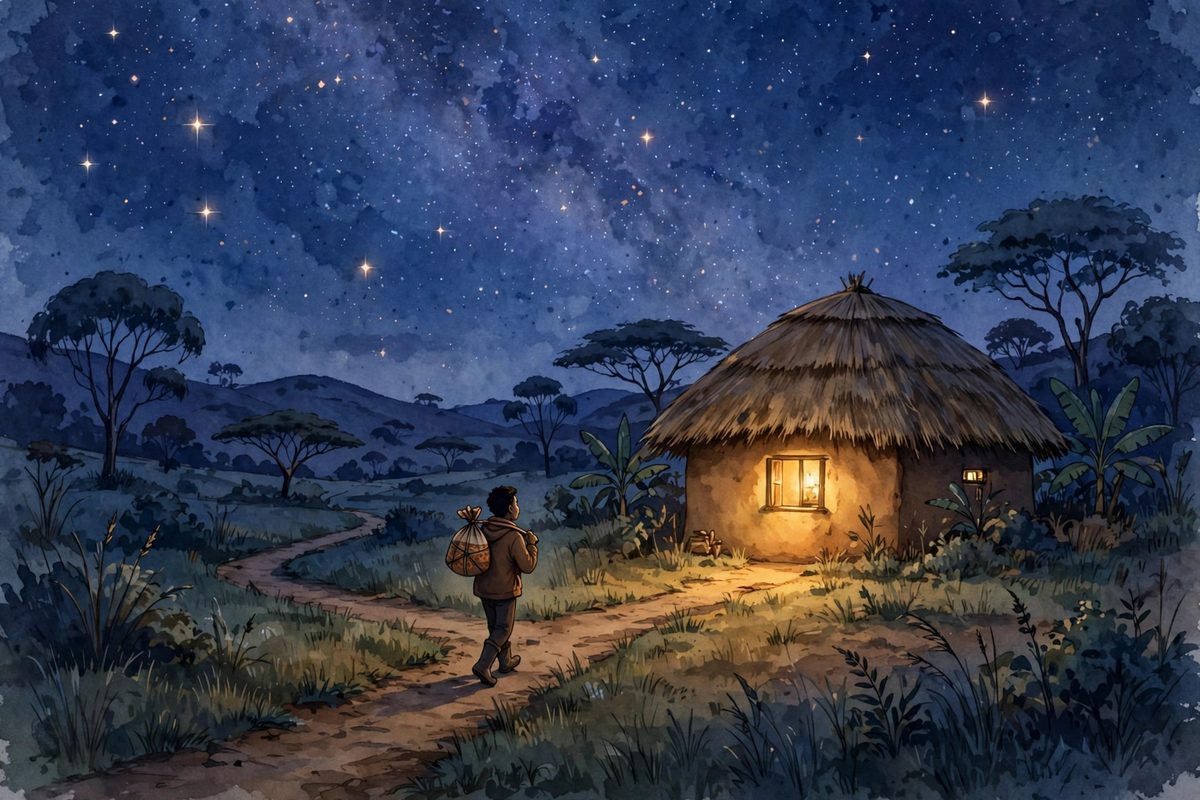
A young man with a small bundle walking at night toward a home with a lamp in the window

8. The Door That Was Never Locked

The way back is always open — a fallen man is the reason the lamp stays lit.

Ochieng was the clever one, and the village knew he would go far. He took his share of his father’s cattle early — the elders shook their heads, but the cattle were his by right — and he went to the town to become a rich man.

The town is a good teacher and a hard one. In three years it taught him everything: how money comes, how money goes, and how friends go with it. He came home the way the fallen come home — walking, at night, with his bundle small and his shame large, planning to sleep in the bush and face the village at dawn.

But as he came down the path, he saw what he had not expected: a lamp burning in his father’s window. And his father, who should have been asleep, sitting outside like a man expecting a guest.

The old man did not ask about the cattle. He did not ask about the town. He stood up, went inside, and came out with a bowl covered with a cloth, still warm from the fire.

“You have walked far,” he said. “Eat.”

In the morning the village knew Ochieng was back — and here is the thing the young ones must hear: nobody asked where the money went. That week the konyir was raising a granary at his uncle’s, and when the line formed at dawn, a tool was put in Ochieng’s hands like he had never left it. He worked the whole day with tears cutting the dust on his face, and nobody mentioned those either.

Years later, when his own son was grown and restless, the old father — grandfather now — told the boy the law of the house: “Go, if you must go. But know this. In this home the door is never locked against its own. A lock is for strangers. And a man who has fallen is not a stranger — he is the reason the lamp stays lit.”

The old village did not keep its fallen out. It kept a lamp in the window for them.

↑ Back to the list

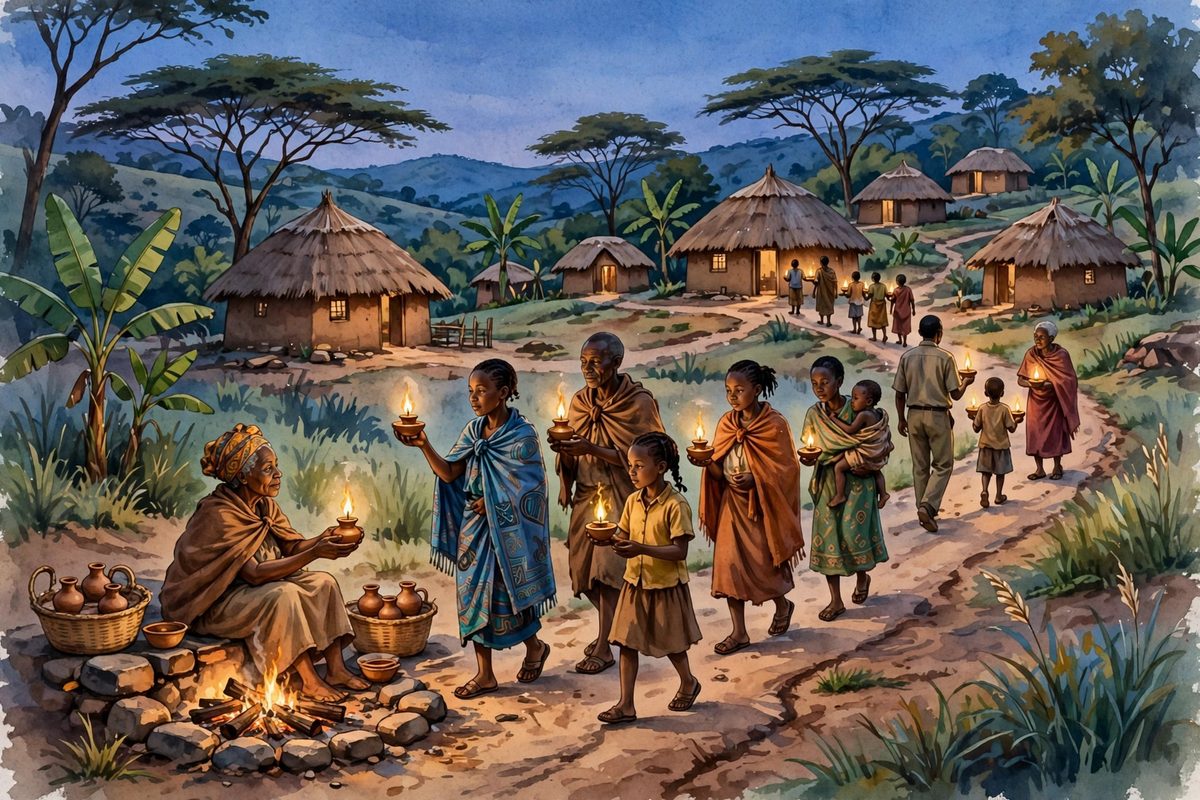
Villagers carrying clay lamps lit from the grandmother’s hearth along the paths at dusk

9. The Grandmother’s Fire

A fire is not diminished by lighting another — what the old ones shared, they shared until it was everywhere.

For sixty years, the fire in Min Akeyo’s hearth never went out. Not once. Through droughts and feuds and funerals, through all the years the village changed around her, her fire burned — banked under ash at night, breathing again at dawn.

In those days not every house could start a fire easily, and every morning the children of the village came to her door with a shard of broken pot, and carried a coal home glowing, and every cooking fire in Nyangweso was lit from hers. The young ones thought it was only about fire. The old ones knew better. A house whose fire had gone cold — from sickness, from sorrow, from a quarrel that emptied it — could come to her hearth and take not just a coal, but a reason to begin again. She never sent anyone away. She would say: “A fire is not diminished by lighting another. Go. Cook. Live.”

The morning she died, no smoke rose from her roof.

Nobody had to send a messenger. House by house, the village looked up, saw the empty sky above her homestead, and understood — and by the time the sun was high, everyone had come.

At her burial the elders did a thing that the grandchildren still tell. They took the last embers of her hearth, and from them each homestead lit a small clay lamp, and forty lamps were carried home through the dark, one to every house, flickering along the paths like the village itself was walking.

So her fire did not die. It divided. It burns tonight in forty houses.

That is what the old ones did with everything good: they shared it until it was everywhere.

↑ Back to the list

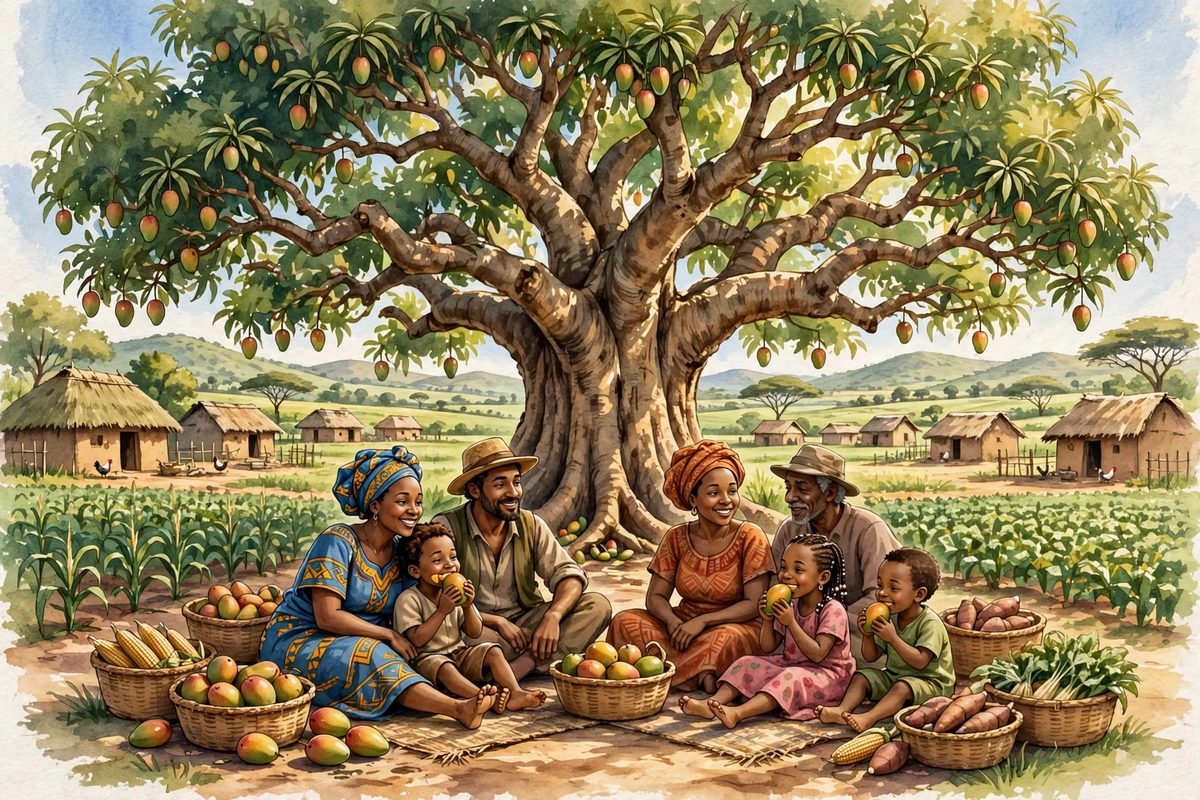
Two families resting together under a great mango tree between their fields

10. The Boundary Tree

The old way did not win arguments — it planted trees over them.

When the old man died, his two sons divided his field the way brothers have divided fields since fields began: one furrow this way, one furrow that way, and a boundary line between them thin as a knife.

By the second season, the line had become a quarrel. A row of maize stood too close. A goat crossed. Words were said that cannot be unsaid, and then the worst thing of all happened — the thing the elders feared more than any argument: silence. A whole season of it. Two brothers farming shoulder to shoulder, not speaking. And the village felt it the way a body feels a thorn, because a konyir cannot enter a divided home, and a divided home stands alone against every storm.

The elders could have judged the boundary. They had the right, and both brothers demanded it. Instead, one grey morning, the elder brother was found on the disputed line itself, digging — and into the hole he set a young mango tree.

His brother came running, hot with anger: “You plant on my land now?”

The elder brother pressed the earth down with his foot, slowly, like a man sealing a letter. “I plant on our line,” he said. “A fence would say mine and yours. A stone would say mine and yours. But a tree, brother — a tree says ours. Your children will eat from it. Mine will eat from it. And the tree will never ask whose mouth it feeds.”

The younger brother stood a long time. Then he went and fetched water, and poured it at the roots, and that was the end of the quarrel — not because anyone won it, but because it had been planted over.

The tree is old now, and wide. Grandchildren of both brothers eat in its shade, and if you ask them where the boundary runs, they will point at the tree and laugh — because nobody remembers which furrow started it, and nobody cares.

The old way did not win arguments. It planted trees over them — and ate the fruit together.

↑ Back to the list

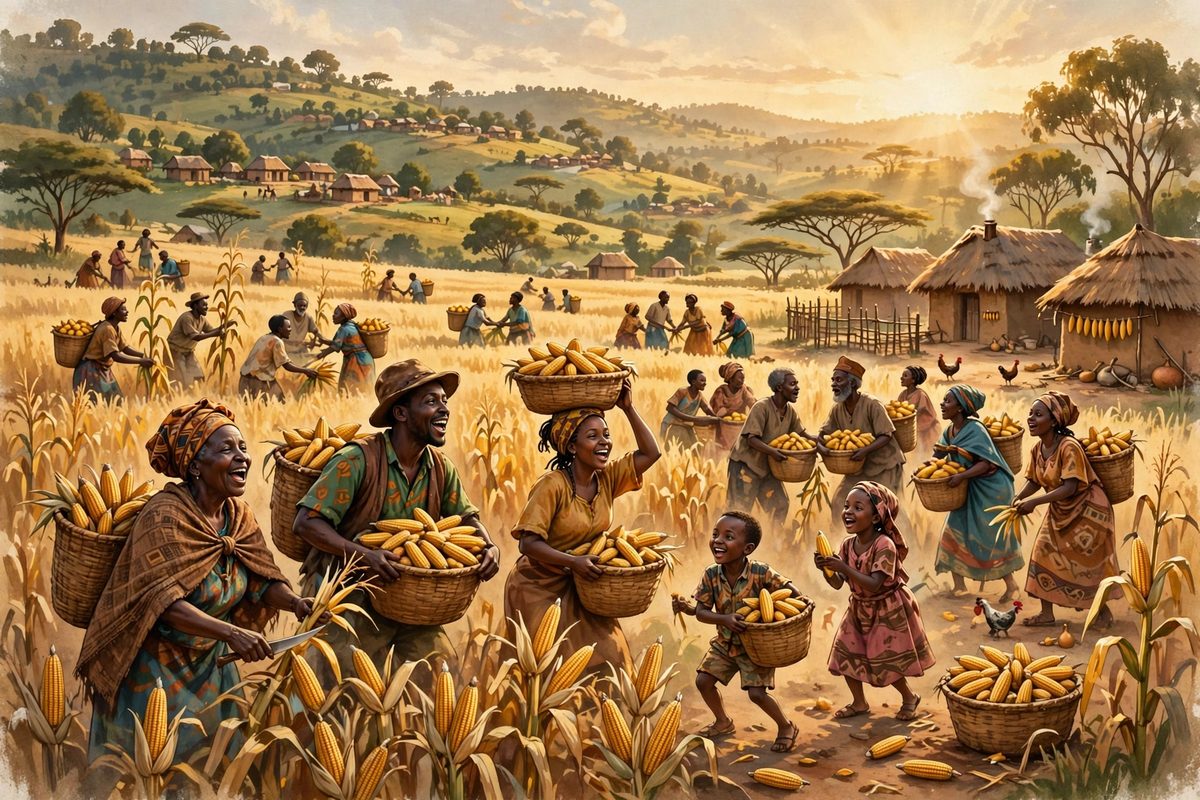
The whole village harvesting a golden maize field together, singing

11. The Singing in the Sick Man’s Field

The song moves from field to field — everybody gets to be the singer, and everybody gets to be the sung-for.

The fever took Owino in the very week of harvest, and it took him hard. He lay on his bed in the dark of his house, too weak to lift a hoe, listening to his maize stand ripe in the field with nobody to bring it in — doing the arithmetic of ruin the way a sick man does in the middle of the night.

Then, on the second day, he heard it through the wall: singing. Harvest singing, far off and joyful. His heart broke quietly in the dark. The village was feasting in its fields, and he was forgotten. He turned his face to the wall so his wife would not see.

She came home at dusk with dust on her legs and grain chaff in her hair, and she found him weeping, and she laughed — actually laughed — and wiped his face.

“Old man, where do you think that singing was? It was in your field.”

The elders had ruled it without telling him, the way the old village did its best work without announcement: his field first, because his need was first. The whole village had moved through his rows that day like one animal, and his granary — his granary, the sick man’s — was the first in the village to be filled that year, filled to the top, by other people’s hands.

Owino recovered slowly, and when he could walk he went to the elders with his question prepared: how could he ever repay such a thing? He had counted it. It was more than he could return in five seasons.

The oldest elder waved the counting away like smoke. “You cannot repay it. That is why it works. Listen: next season the strength will be in your arms, and the need will be in another man’s house, and the song will move there. Nobody here keeps the account — so nobody is ever in debt, and nobody is ever alone. Stay in the village, Owino. Your turn at both ends of the song will come.”

That is konyir. The song moves from field to field — and everybody gets to be the singer, and everybody gets to be the sung-for.

↑ Back to the list

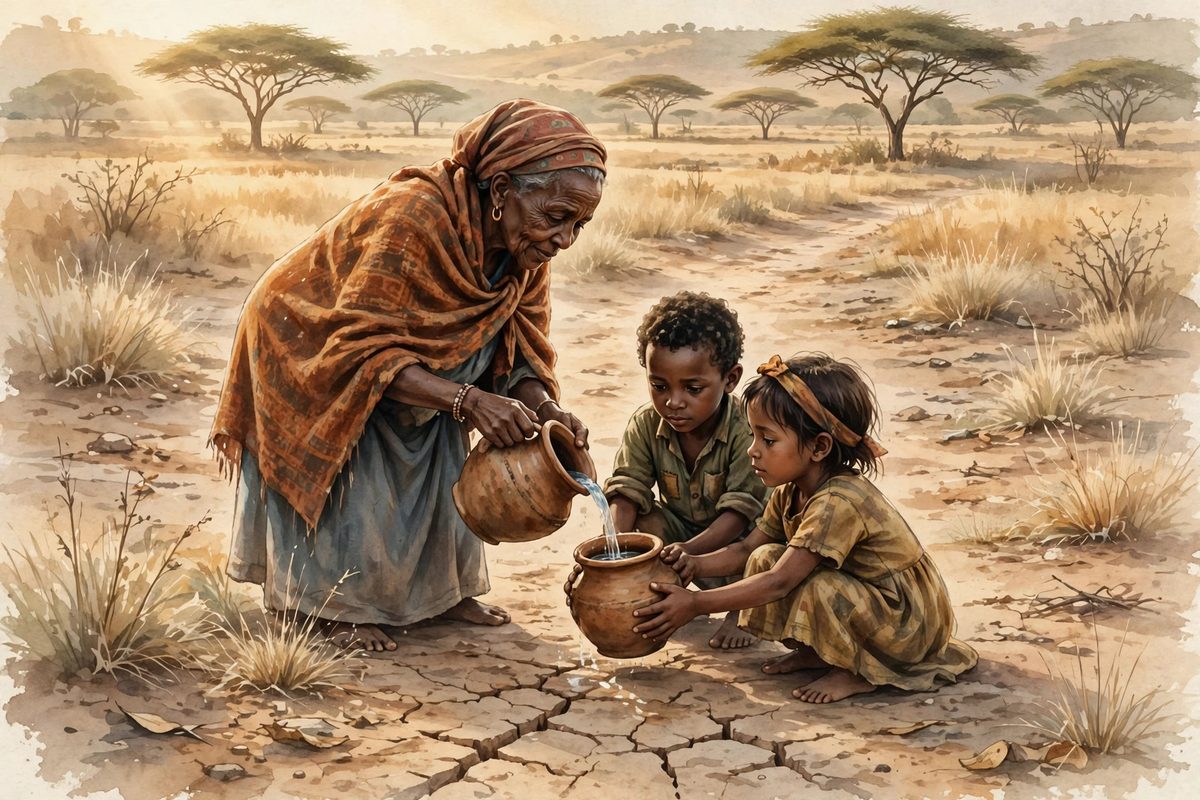
An old woman pouring her water into the children’s pot on the dry path

12. The Last Pot of Water

In scarcity, the old way shared first and counted later.

In the drought year, when the river shrank to a brown thread and the wells gave mud, water became the village’s money, its prayer, and its sorrow — all three in one pot.

Min Otieno was old, and the path to the water was long, and she made the walk at dawn while her legs were still hers. That morning she came back slowly, balancing the one pot — all the water her house would have that day — and on the path she met the neighbor’s children coming the other way with an empty pot and dry mouths, turned back from a well that had given them nothing.

She did not hesitate the way we hesitate now, counting her own first. She set her pot down in the dust of the path and poured — half of it, then, seeing their faces, more than half — into the children’s pot, and sent them running home with it.

Her own daughter was waiting, and her voice was sharp with fear: “Mother! What will we drink today?”

The old woman set the light pot down gently. “We will drink when the rain comes, my child. And hear me: when the rain comes, it will not ask whose roof it may fall on. It falls on the kind roof and the selfish roof alike. So neither should we ask, when we pour.”

That evening, as the light failed, there were small sounds at her door. A cup of water, left by one house. Then another, from another path. Then a third. Nobody announced themselves. Nobody wanted to be thanked, and nobody wanted her gift turned into a debt.

By full dark, the pot by her door stood full again.

In the old way, water poured out in the morning had a way of finding its way home by night. Not by magic. By neighbors.

↑ Back to the list

Tell Us Your Story

We are collecting Roots Stories from our elders — the memories of how this community lived when it lived together. If your grandfather or grandmother carries such a story, we would be honored to sit with them, write it down with their permission, and share it here with their first name and village — honoring them as a Root Keeper, a guardian of the village’s memory.

Reach us on WhatsApp: +254 701 917972 — or speak to any Empower officer.

Riwruok e teko. Unity is strength. It always was ours.