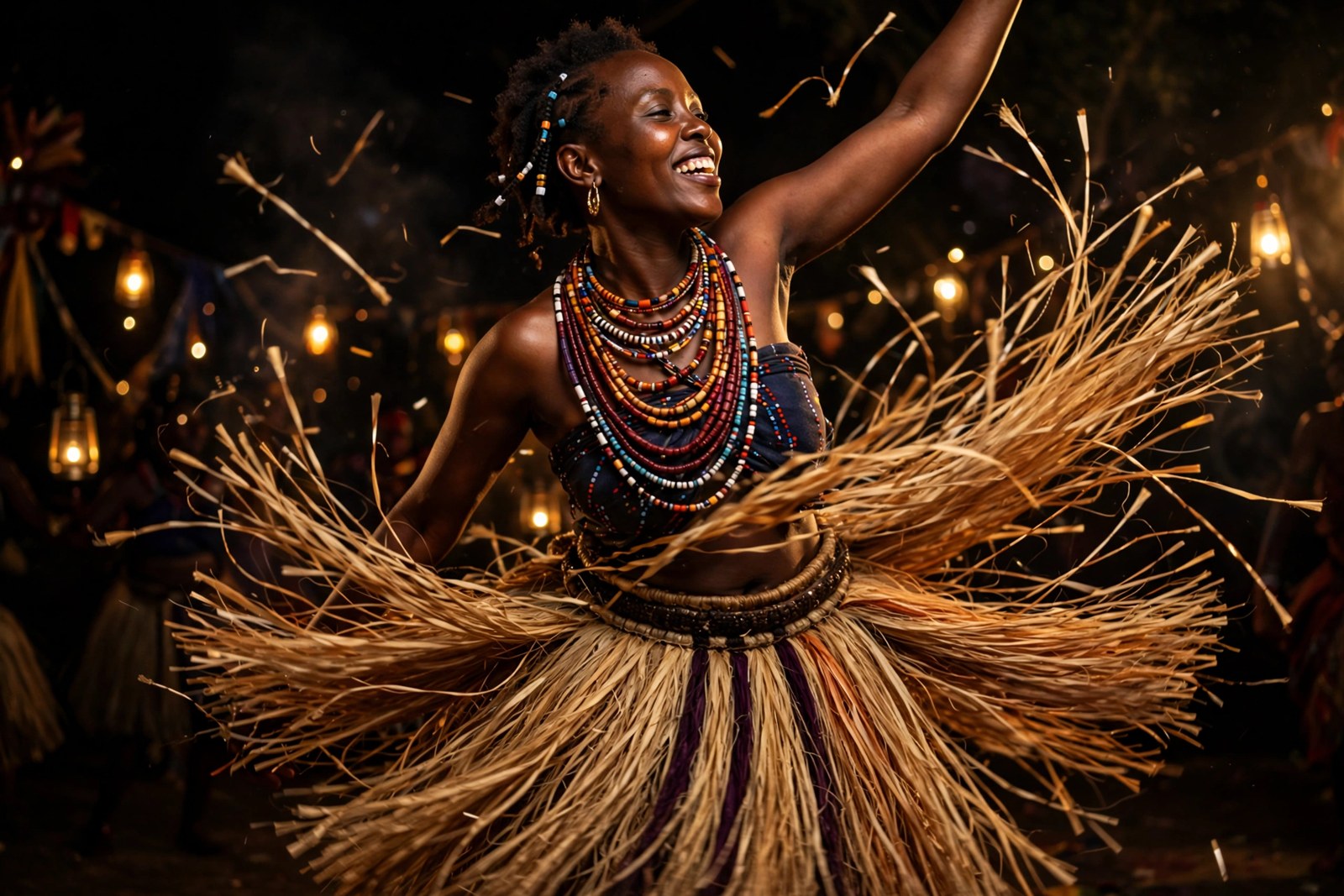
A Luo life is marked by ceremony from the first name spoken over a newborn to the last farewell at the graveside. Some rites have faded, some have changed their clothes — and some are bigger today than ever.
A Luo child's name tells the story of their arrival. Otieno / Atieno — born at night. Ochieng' / Achieng' — born in the light of day. Okoth / Akoth — born in the rain. Twins receive their paired names — Odongo and Opiyo, Adongo and Apiyo. Children also carry the names of ancestors, keeping the family's line unbroken — so that to hear a name called across the dala is to hear history itself answering.
Unlike our Bantu neighbours, the Luo did not traditionally circumcise. Adulthood was marked instead by the removal of the six lower front teeth — nak — a test of courage and endurance undergone by boys and girls alike. The elders also gave a practical reason: through the gap, food and medicine could still reach someone struck by lockjaw. The rite earned the Luo the nickname Jonagi — "the people of the removed teeth." Common until about the 1970s, it has since been left behind; today many young men choose medical circumcision instead, and initiation is marked by church and family celebration.
Marriage — keny — was, and remains, one of the two great ceremonies of Luo life: built on negotiation between two families and on bridewealth in cattle, binding not just a couple but two homesteads. The first wife, the mikayi, held a place of special honor — at her wedding she was presented with a ceremonial headdress, the ligisa, fitted and bought for her by her brother-in-law. In generations past, polygamy was common and a widow could be inherited by her husband's brother (ter) so the homestead stayed whole — a custom that has now sharply declined. Today's Luo wedding blends the old and the new: family negotiation and bridewealth, a church ceremony, and a celebration that can fill a village.
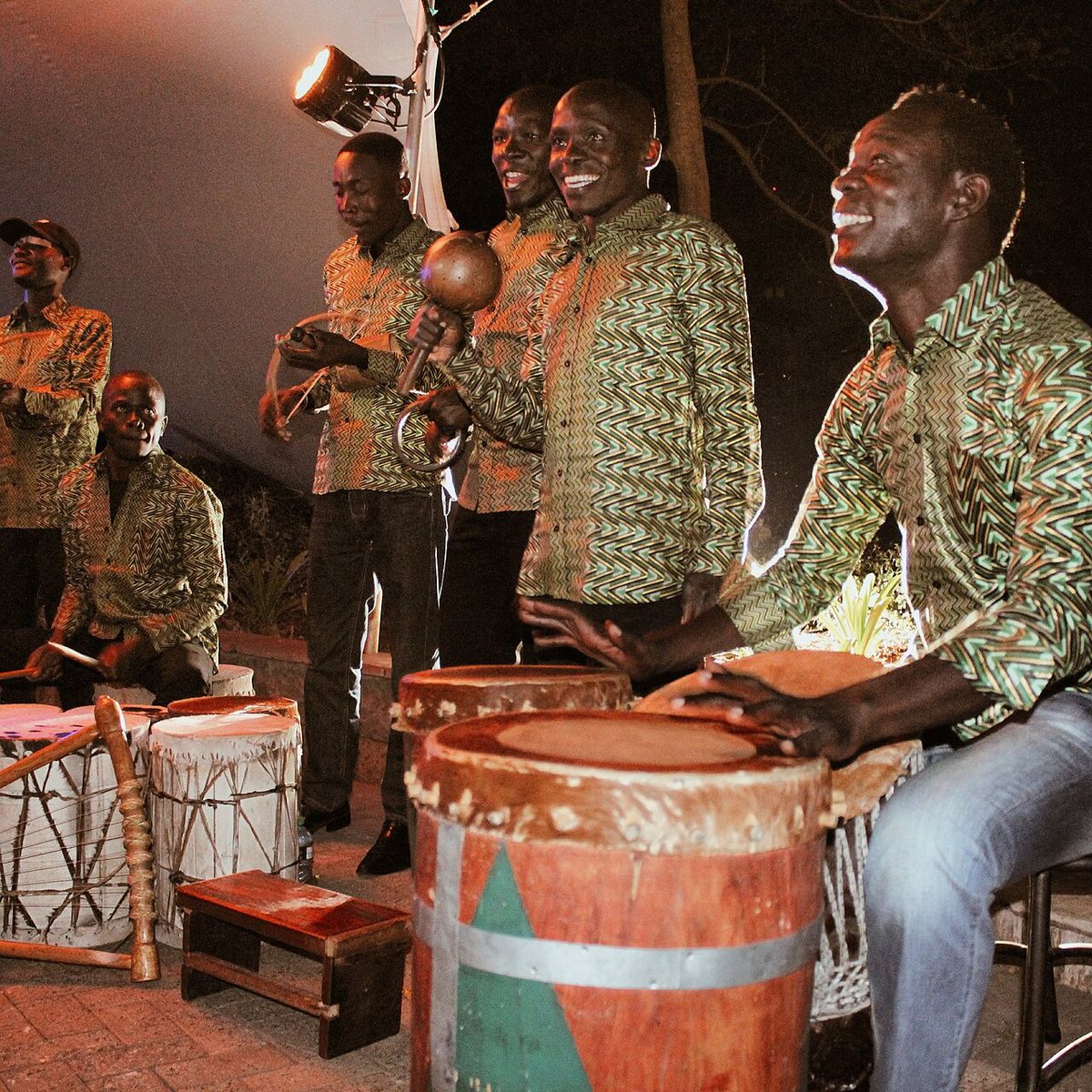
No ceremony in Luo life is greater than the farewell. A funeral unfolds in stages — the announcement, the night vigil of singing and recounting the departed's life, the burial, the shaving, and the feasts of remembrance. Tradition is firm on one point: the dead are buried at home, on ancestral land — a married man by his house, traditionally on its right side, a married woman on the left. When a famous Nairobi lawyer's clan fought for his body in the S. M. Otieno case of 1987, the courts upheld the clan — and the whole nation learned how deep this custom runs.
At the heart of the farewell stands tero buru — "taking away the dust": mourners drive cattle through the homestead, blow horns, raise the dust and stage a mock battle to drive death itself away and escort the spirit onward. Afterwards comes liedo — the shaving of the widow and close family — marking purification, and the slow, feasted turn back toward life.
Words can only carry the dance so far — so here she is for your own eyes: the Ramogi dance of the Kagan Kochia Traditional Dancers of Rangwe, here in Homa Bay — the ostrich-feather crowns, the drums, the shoulders that speak. Tap play and stand in the circle. The films live on YouTube, where their owners keep them; we simply open the door.
The second film is a treasure of this house: in 2011 the Singing Wells project came to Homa Bay for one reason — to record the music and dance of the Luo before it could be lost. That is the very work this whole house exists for.
And here is the other half of the circle — the women. The Dodo is the ladies’ own dance, elegant and joyful: bright dresses, sisal skirts swinging, the whole body keeping time with the du-du drum. Ramogi for the fathers, Dodo for the mothers — together they are the whole dance of the people.
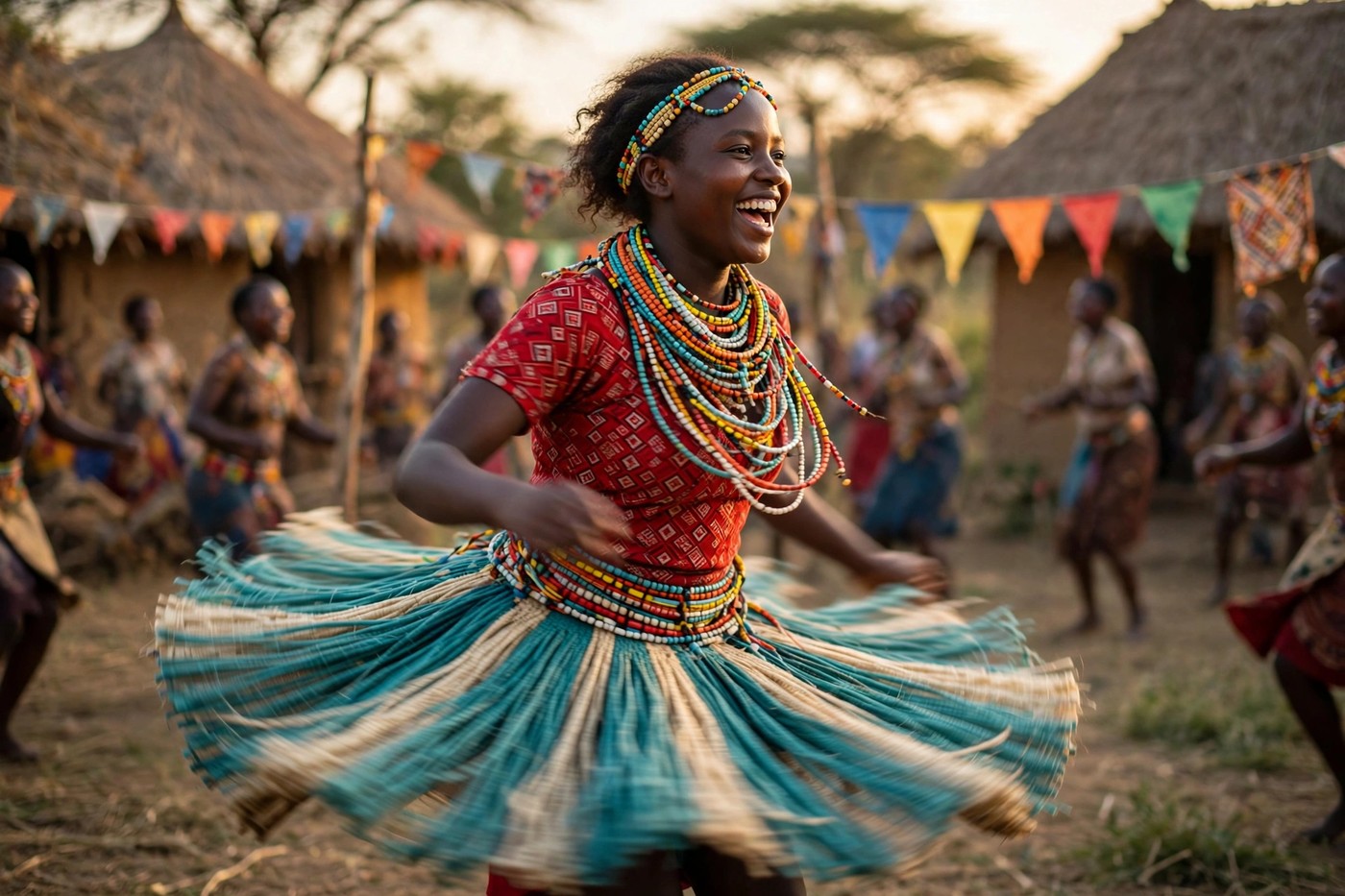
Music is memory carried in sound, and it stands at the centre of every ceremony, wedding and funeral alike.
Nyatiti — the eight-stringed lyre, the iconic Luo instrument. Its player sings praise, history and
sharp social commentary while the people sing and dance along.
Orutu — the one-stringed fiddle, its single mournful line bound up with mourning and remembrance;
the player dances as he plays.
Dodo — the traditional dance of celebration, in coordinated circles and lines, prized for grace.
Moo nam — the "lake dance," distinctive to the lakeside communities of Nam Lolwe.
Ohangla & benga — ohangla, named for its drum ensemble, began as folklore music for burials,
weddings and gatherings, then walked out of the ceremony into the clubs and onto the national stage;
guitar-driven benga, born on this lakeshore in the late 1960s from nyatiti, orutu and dodo patterns,
is one of the great gifts Luo musicians gave all Kenya.
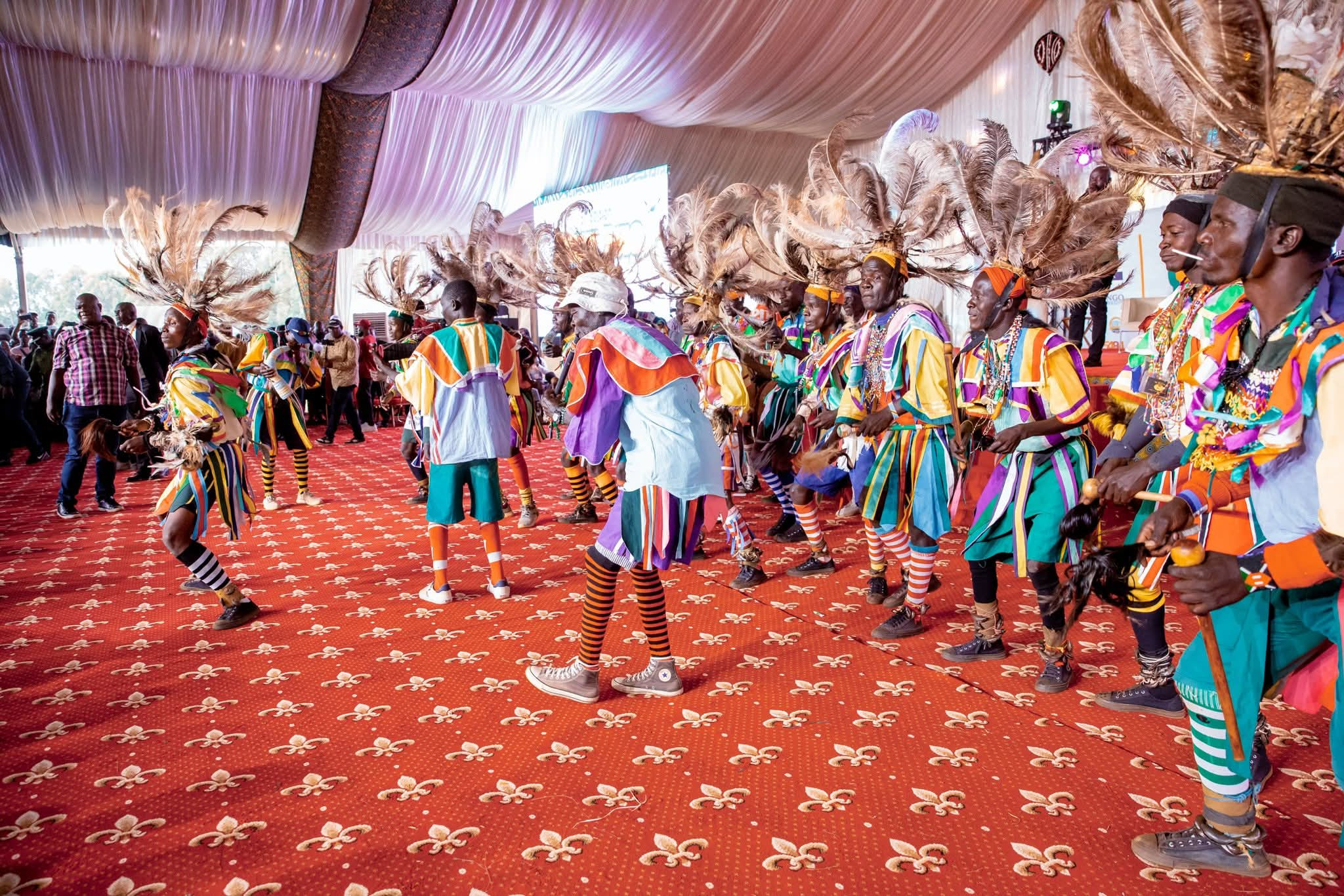
The great modern gathering of the Luo nation — Luo from Kenya, Uganda, Tanzania, South Sudan, Ethiopia and the diaspora, with traditional dance, boat racing, wrestling and a demonstration of tero buru. Homa Bay takes her place alongside Siaya, Kisumu and Migori.
Homa Bay's own flagship: every December on Rusinga Island, two days of Suba music and dance, boat racing, wrestling, traditional food and storytelling — an ancient island heritage deliberately kept alive.
With most Luo now Christian, Sundays, choir music, church weddings and church-centred funerals are the living ceremonial rhythm of Homa Bay today — often blended with the old customs of burial at home and tero buru.
Christmas, Easter and New Year are celebrated as across Kenya — and December doubles as homecoming season, when families return to the dala and both great festivals light up the lakeshore.