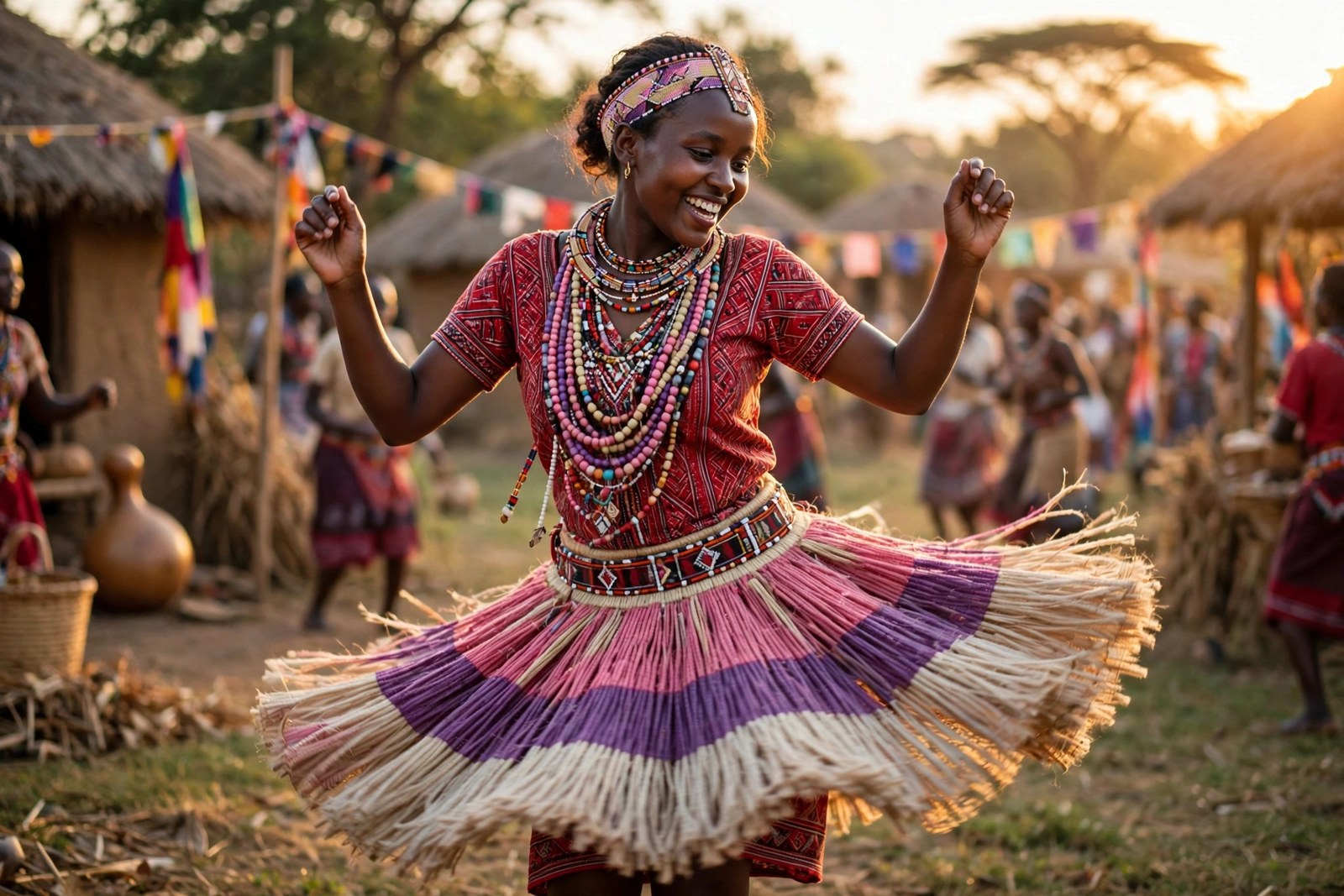
What our people wore — and what everything was called. Skins and sisal, beads and cowrie shells, the skirt that swings in the dance. The Luo were called the most picturesque people in Kenya — this page shows you why.
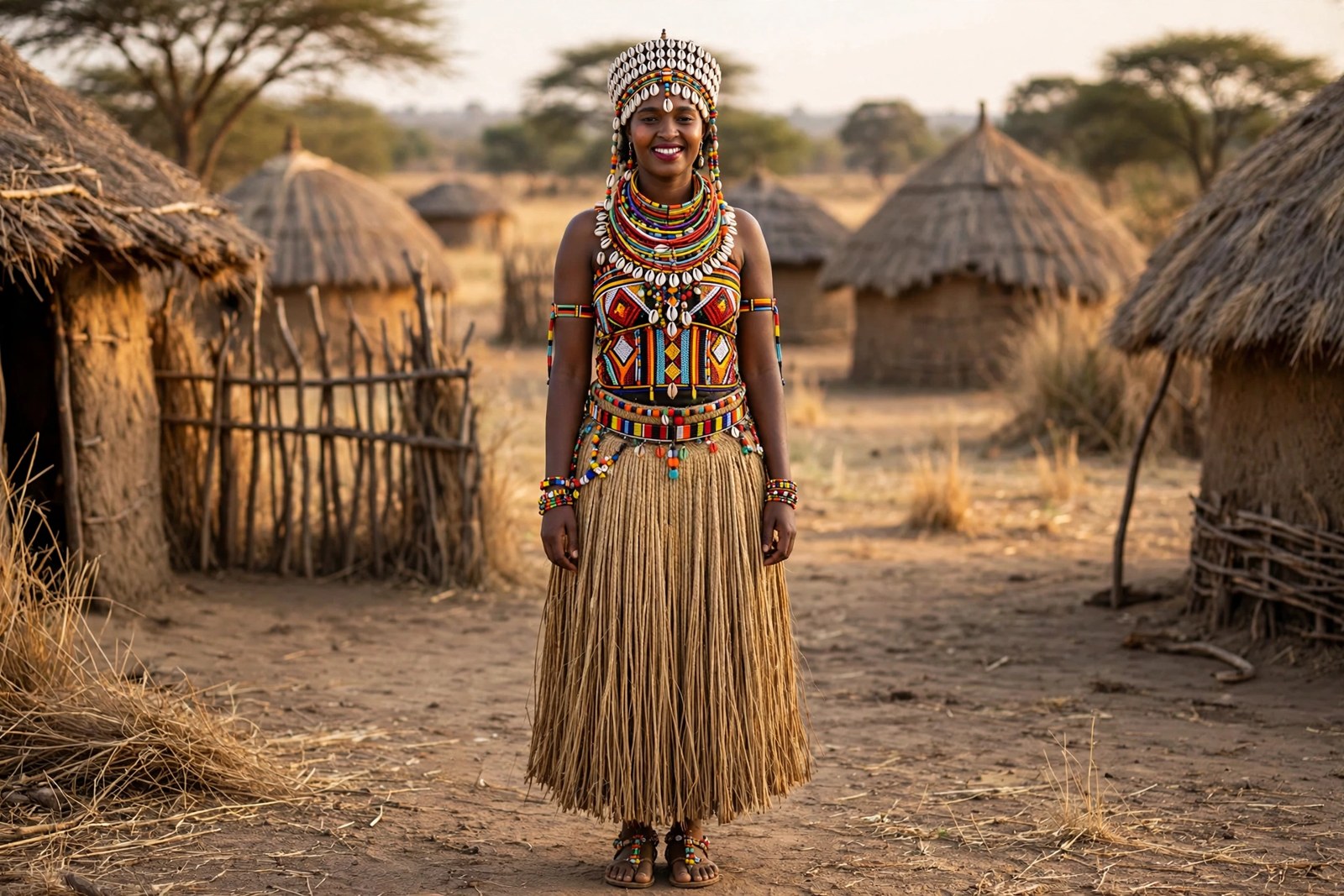
Traditional Luo clothing was made from what the land gave: animal skins, plant fibre, beads, shells and metal. A man's everyday dress was skin — pien — worn as kuodi, from the shoulders or the waist, with reed hats; for ceremony he carried shield, spear and club. Women wore aprons called olemo — and dressed the body itself with ornament rather than cloth.
The old photographs kept at the Pitt Rivers Museum in Oxford read like a jewellery list — this is what a Luo woman wore near Kisumu in 1902:
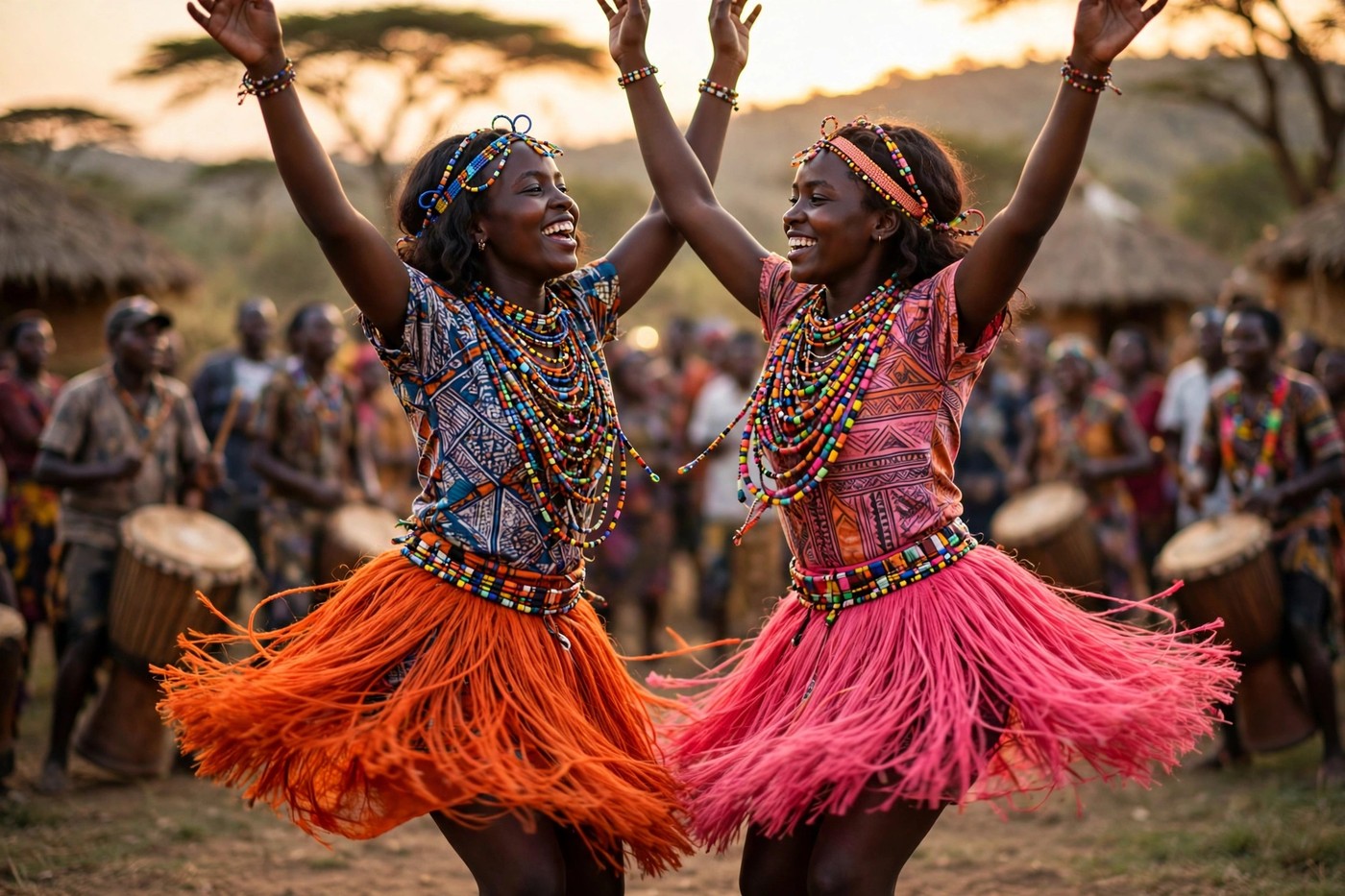
For dances and performances the Luo dressed not only for beauty but to enhance movement — and the signature piece is the owalo: a skirt of sisal strands tied at the waist that swings and flies as the dancer moves. The National Museums of Kenya keeps the owalo in its collection, made for dancing at ceremonies — and dancers still hand-make and wear it today.
Women painted the skin with red or white clay and wore beads — ombulu, tigo — at neck and waist. Hunted birds gave feathers for headdresses. And for the great visits of life there was the sumwat, a headdress of cowrie shells worn when visiting the in-laws or other important homesteads — dress as a form of respect.
Even grief had its dress code. When her husband died, a widow ceremoniously set aside the skirt of her marriage and took up the okola — a new skirt of banana fibre that marked her as a woman in mourning. By the late 1920s widows were wearing the dead husband's own clothes instead, and by the late 1960s the black dress had come; rural Christian women wore white dresses and scarves on the burial day. The garments changed across the century — the meaning never did: what you wore told the community exactly where your heart stood.
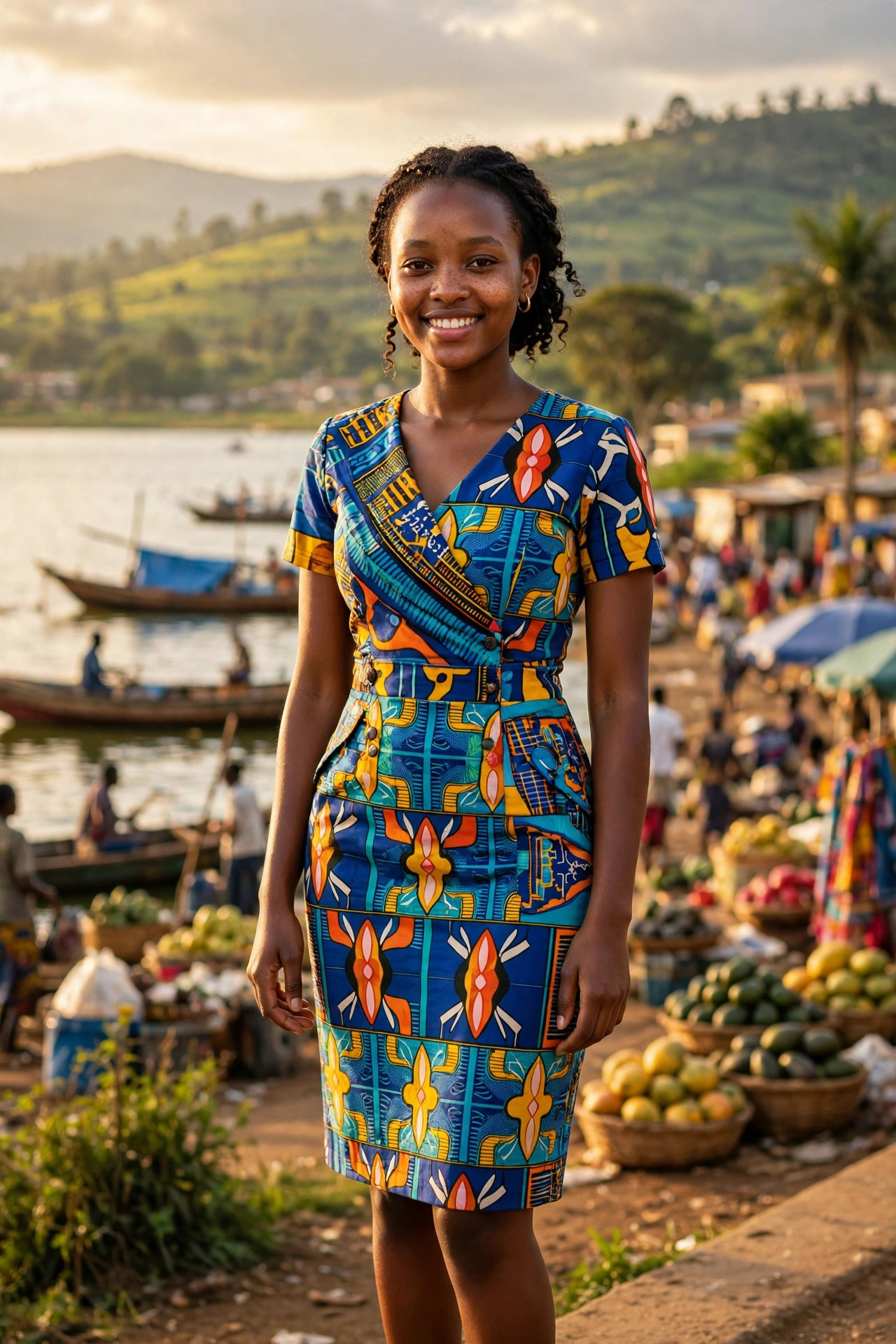
Day-to-day dress today is modern — but the Luo are known for dressing well. At a nyombo, a traditional wedding, the day begins with ayie, the acceptance of the bride price; brides favour bold kitenge prints — blue, yellow, red — with beaded chokers, long necklaces sometimes strung with cowrie shells, and a shawl over one shoulder, while grooms wear sharply tailored African suits and embroidered tunics. It is a flair the community itself calls its culture of elegance. And the true dress of the ancestors lives on where it always lived — on the dance ground, where youth troupes still wear the owalo, and the sisal still flies.
Scotland wears its clans in tartan - this family, those colors, that pattern, known at a glance. Luo dress never worked that way. The old photographs and the museum records show no clan colors: a person’s people were known by their name, their home and their praise songs - not by a color code.
Color spoke of other things. The earth itself - red and white clay smoothed on the skin. The lake and the trade paths - glass beads in red, white, black and blue, worked into necklaces and waist beads, their richness quietly telling a family’s standing. Honor - the sumwat headdress of blue and white beads and cowrie shells, worn when visiting in-laws and important homesteads: you dressed your respect. And the sisal of the owalo was worn in its natural gold, or dyed in bright bands for the dance.
Today the colors are chosen the Luo way - for joy, and for dongo, elegance. At a nyombo the kitenge blooms in bold blue, yellow and red because the day is glad and the people are beautiful. The meaning was never a code. The meaning is celebration.
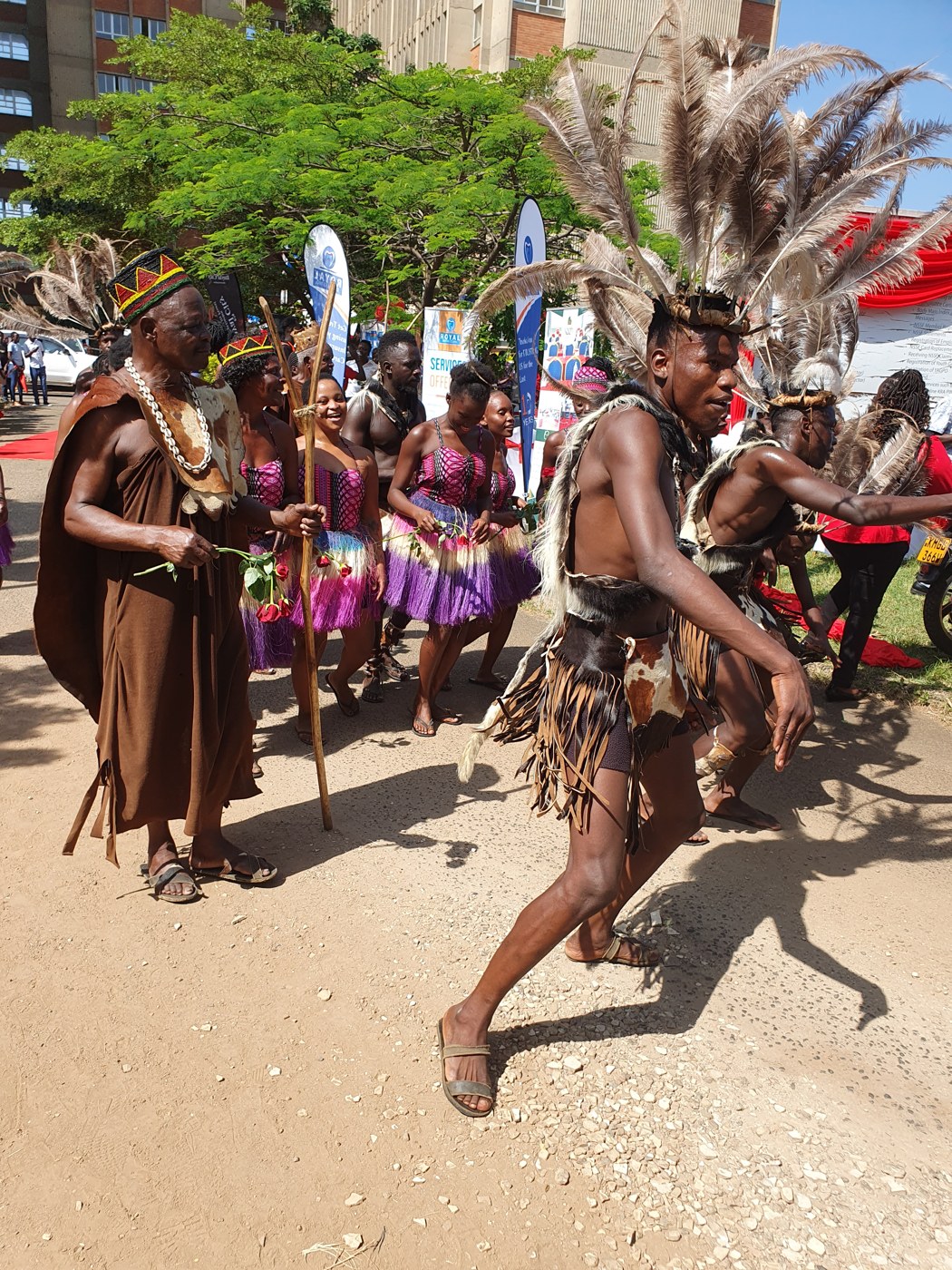
The same story in the men’s dress. Then: the skin wrap, the beads and the woven hat of the dala. Today: the bright shirt at the lakeshore, and the sharp suit on the waterfront - the same pride, in the cloth of the day.
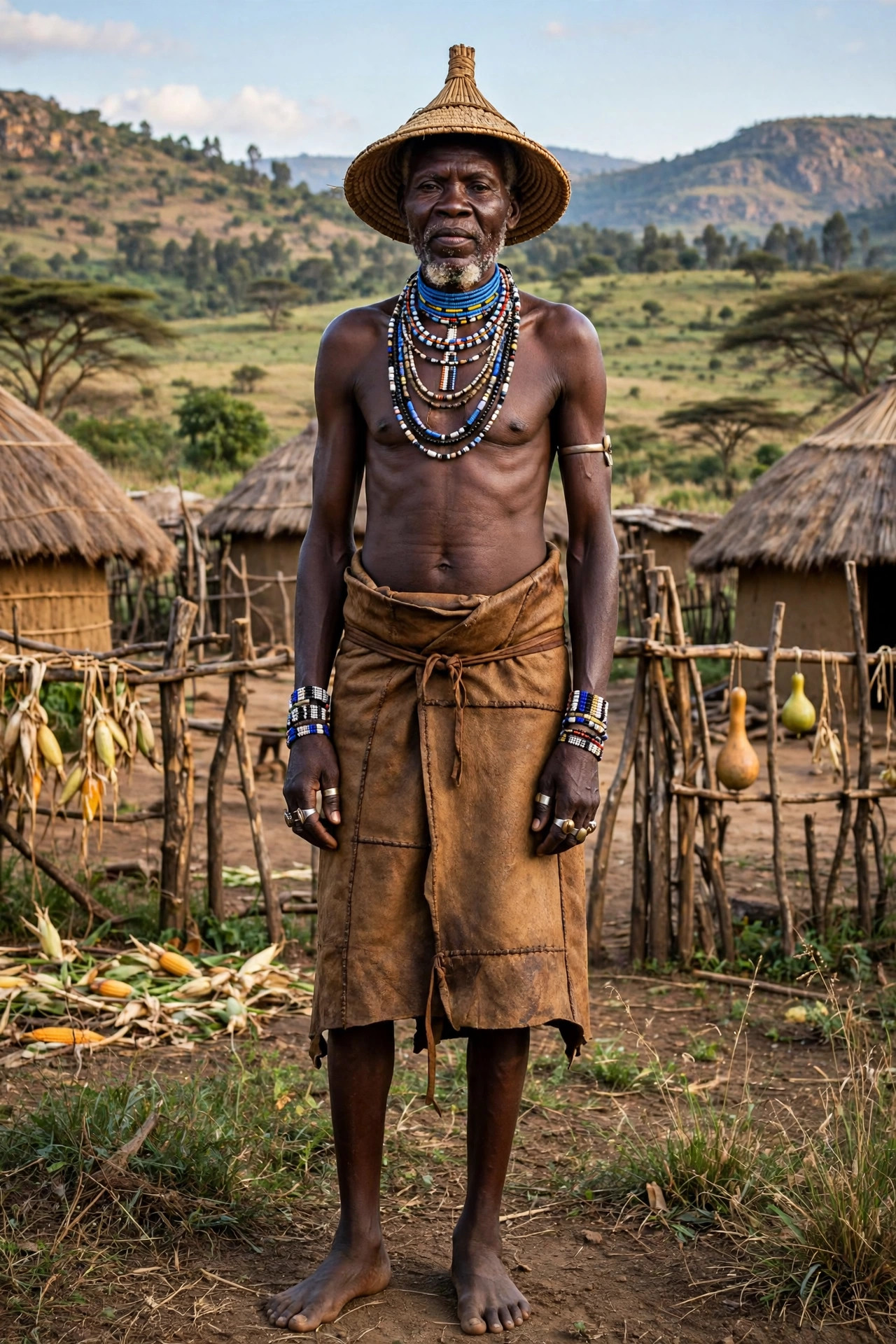


The ladies at the head of this page, in the full dress and in today’s dress are portrait artwork made for this house, and so are the two dancing sisters and the men below. Photograph: Luo dancers - Wihls, Wikimedia Commons, CC BY-SA 4.0. Hung here with respect.