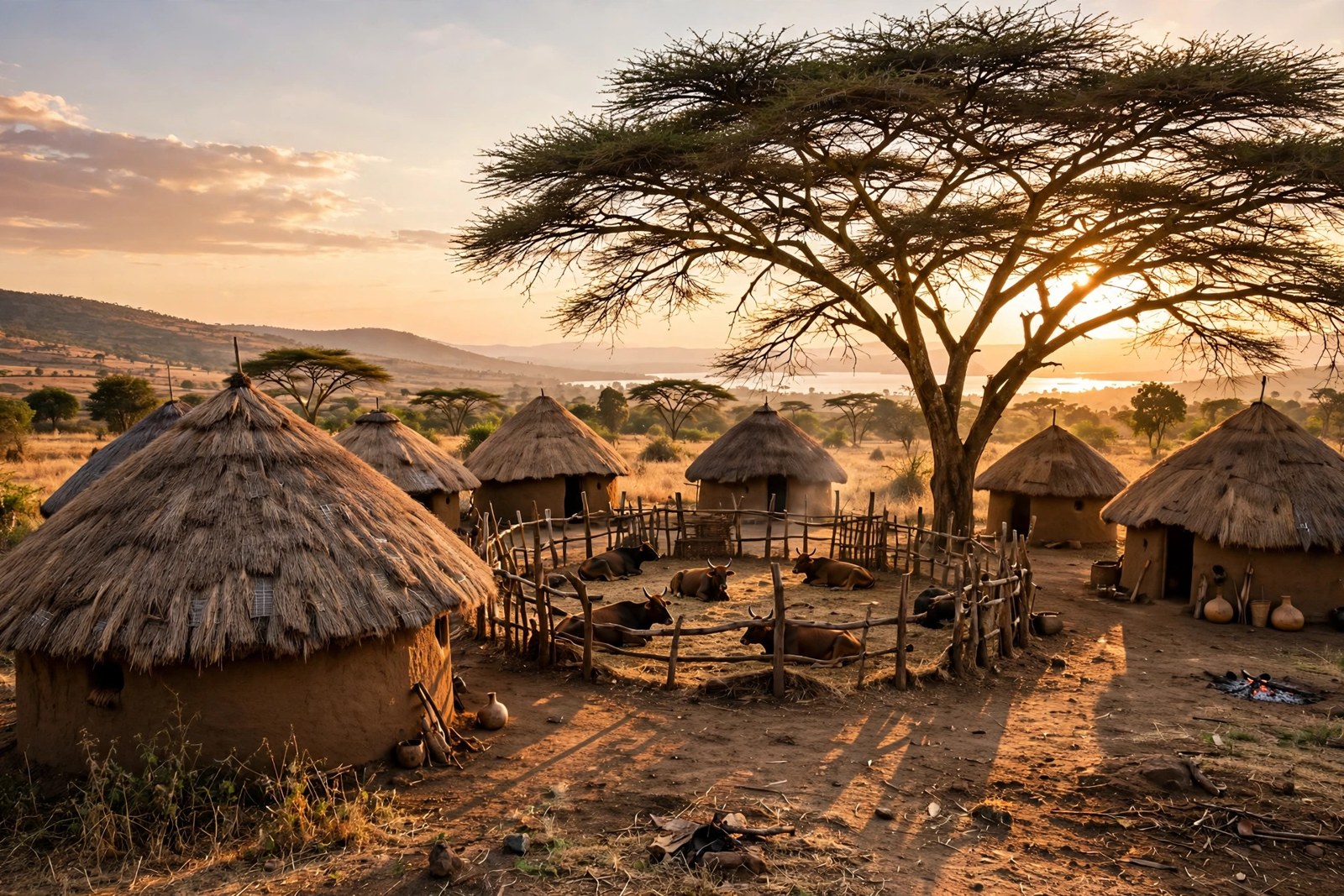
This whole website is shaped like a dala — a homestead you enter and belong to. Now walk a real one, station by station, the way a visitor would have been walked a hundred years ago.
The dala was far more than a house. It was the centre of Luo life — home, farm, court, school and church of the family, all inside one fence. And it was laid out as a map of the family itself: the position of each wife's house and each son's house showed their seniority, so that a visitor could read the whole order of the home just by looking at where the houses stood.
At the heart of the dala stood the abila, also called the duol — the family head's sitting place. Here the men and older boys ate together, here the good portions — the chicken above all — were carried, and here, in the cool of the evening, the matters of the clan were discussed and settled. Every homestead had its centre, and everyone knew where it was.
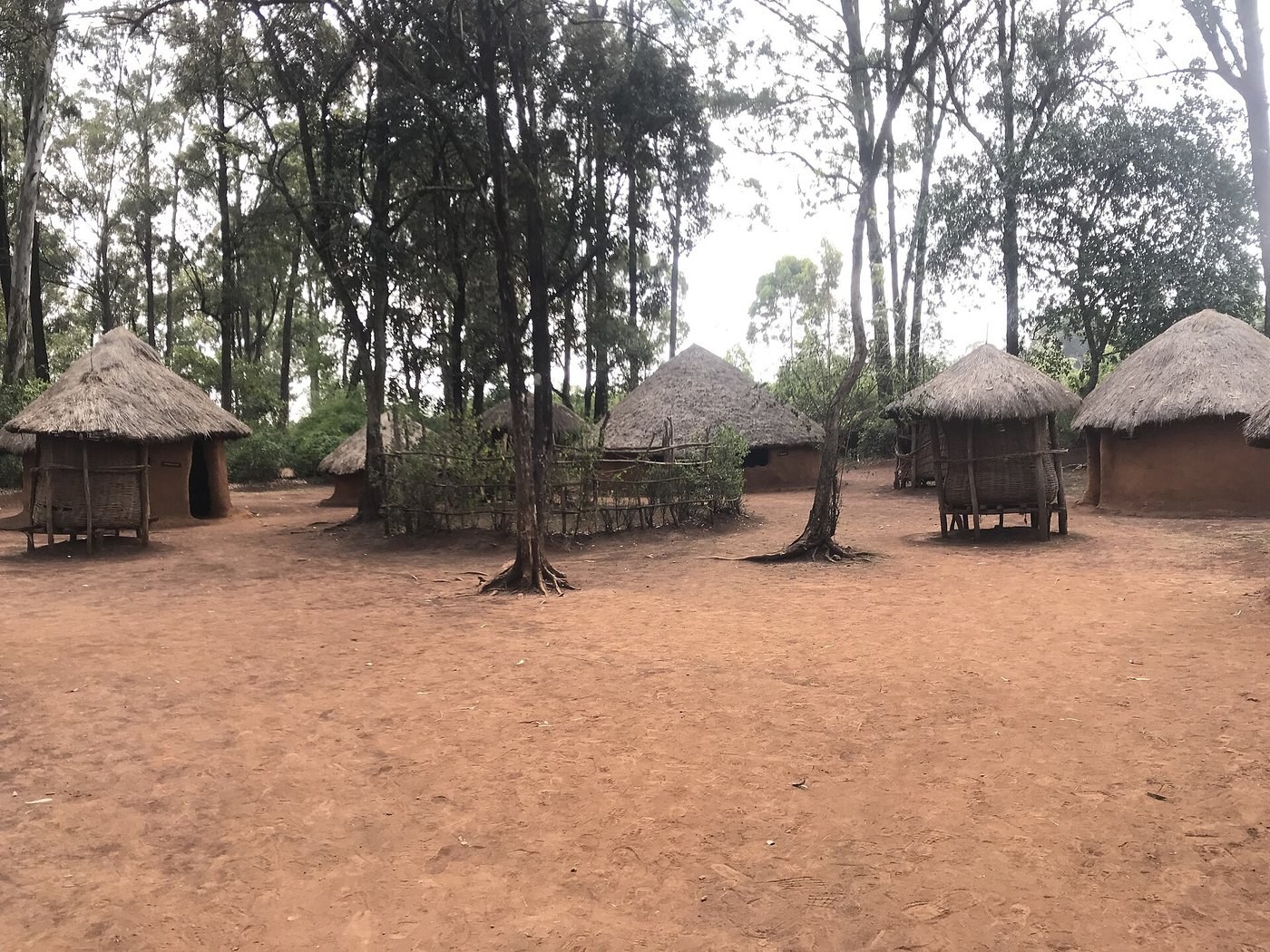
Nothing in the dala stood anywhere by accident. Stand at the main gate — the rangach, the point from which everything was measured — and you could read the family like a book. Directly opposite you stood the largest hut of all, the only one with a veranda: the house of the mikayi, the first wife, the mother of the home. The second wife’s house stood beside hers, to the right; the third wife’s to the left; and so the houses alternated, each in its known and honored place.
In the middle of the homestead, between the first wife’s hut and the kraal, stood the head’s own hut, with his duol where he received his guests. The cattle kraal — the kul — held the very center, where the family’s wealth slept under the strongest guard. Just inside the gate stood the simba, the young men’s house — the home’s first line of defense — and the sons’ huts followed in birth order, the first son to the right of the gate, the second to the left. And in the siwindhe, the hut of the elderly grandmother, the pim, the children slept — and were taught. Order was not stiffness. Order was how everybody knew they belonged.
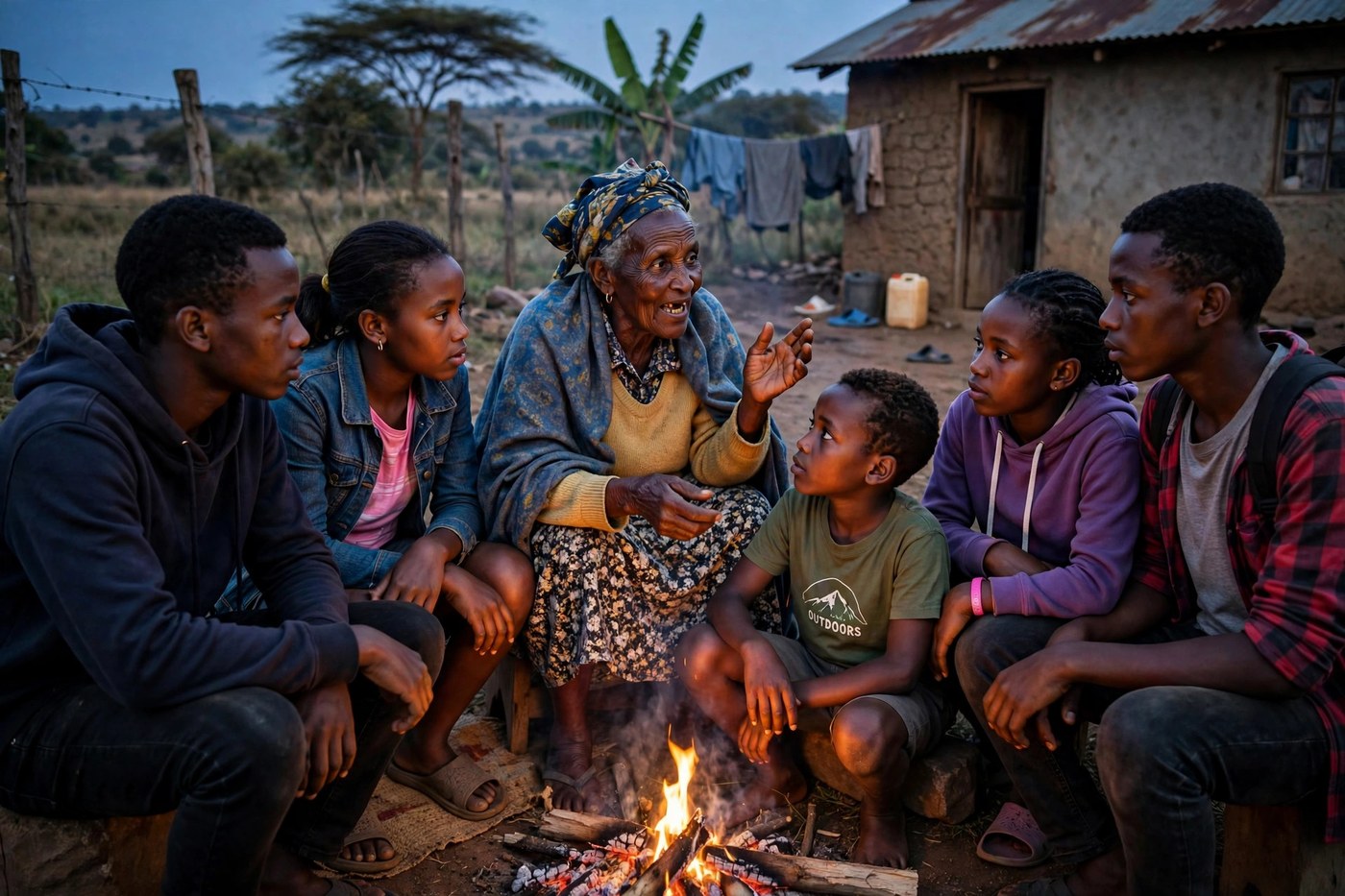
Around the fire — mach — the dala became a school. This is where the elders told the stories, where the ngeche, the proverbs and riddles, passed from mouth to ear, and where a child absorbed the whole moral code of the people without ever opening a book. Our monthly By the Fire sessions keep this station of the dala burning today.
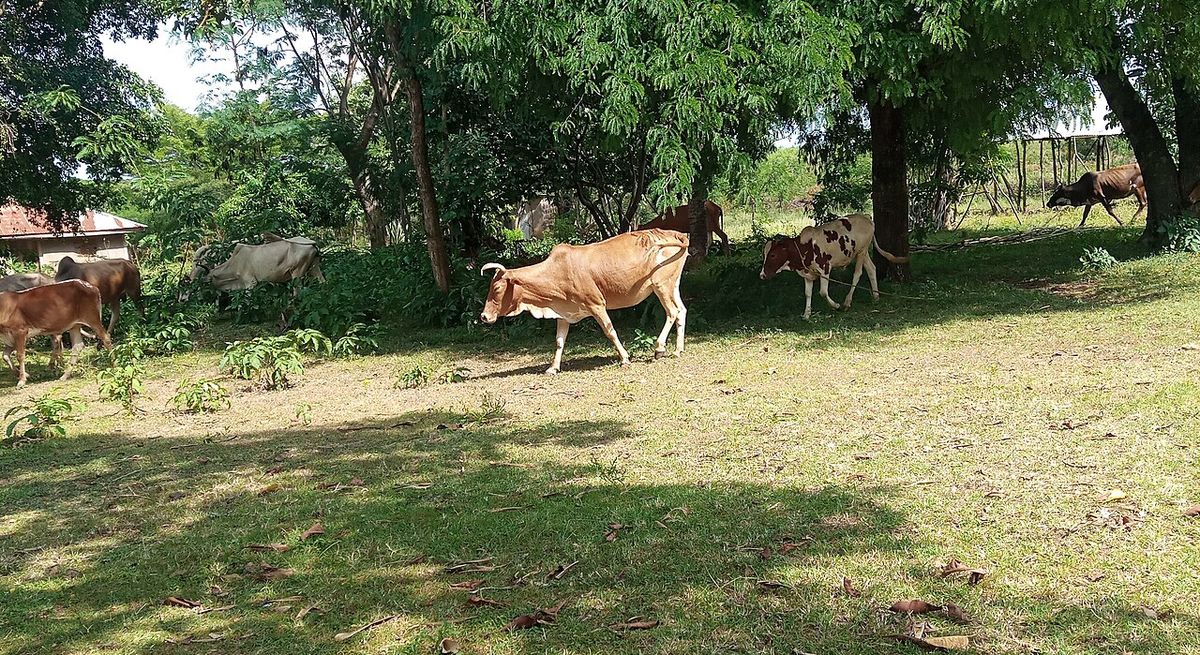
No walk through a dala is complete without the cattle — dhiang'. Cattle were wealth and honor at once: the bridewealth that bound two families at a marriage, the measure of a man's standing, the gift that sealed a reconciliation. A homestead without cattle was a sentence half-spoken.
Beyond the houses lay the fields — the shamba — for farming was the first priority of the old triad of fishing, farming and livestock. Sorghum and millet grew here, and at the grinding stone the women ground the flour for the day's kuon and nyuka. The dala fed itself from its own ground, and the rhythm of the home was the rhythm of the seasons.
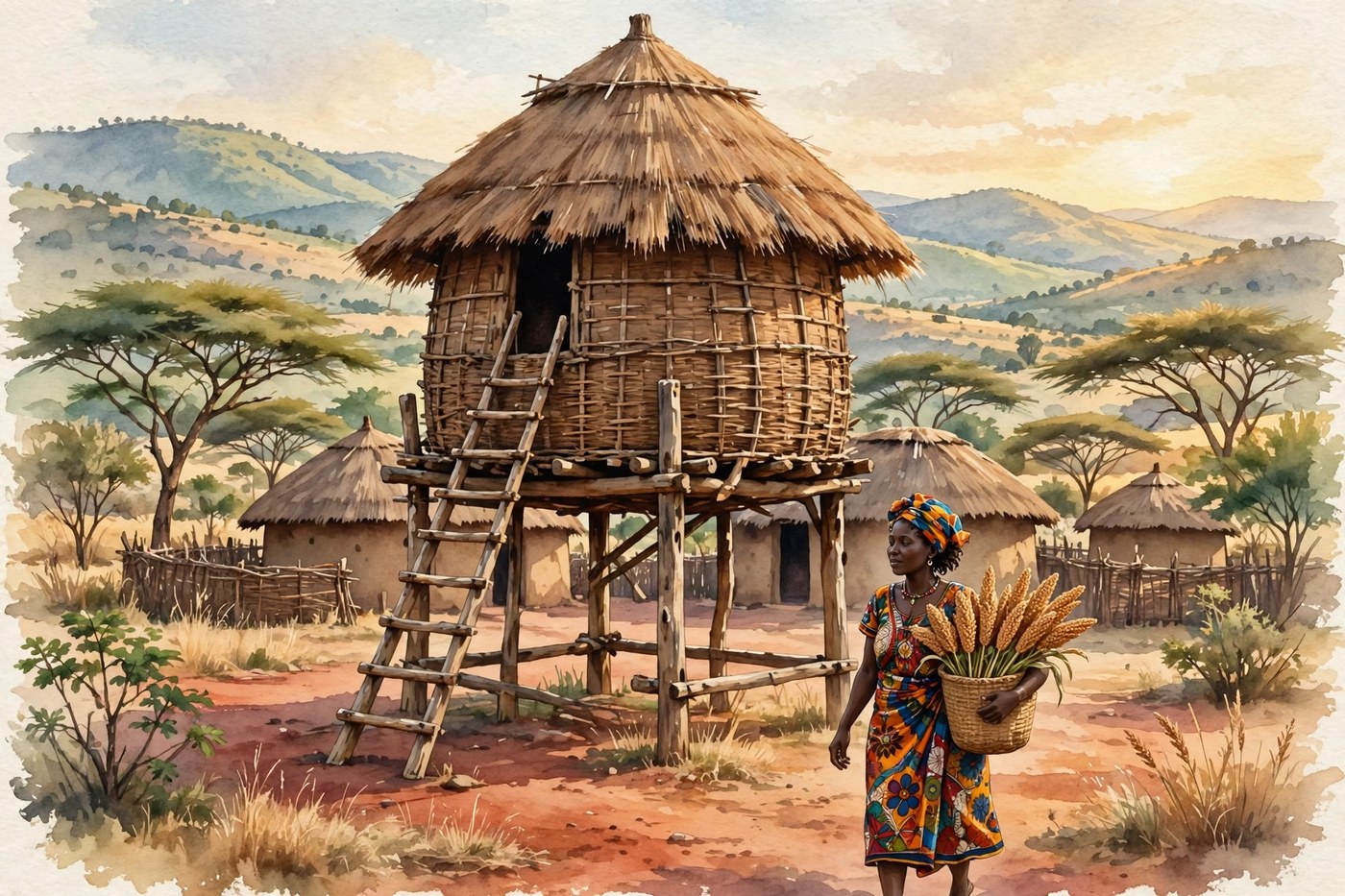
People sometimes imagine one great common granary at the heart of the dala. The old order was finer than that. Each wife had her own dero — a great woven basket of a storehouse, raised high on stilts above the damp earth and the reach of goats, crowned with its own thatched roof, standing to the right of her house. The mikayi, as mother of the home, could keep more than one. Into the dero went the sorghum and the millet of her own shamba — her family’s bread, under her own hand.
And behind the head’s own hut stood his dero, the reserve of reserves, opened only in true emergency. A full dero was quiet wealth: it meant the hungry months could come and this house would still eat, and still have seed for the planting. Food laid up in season was peace laid up for the whole family.
And the walk ends where Luo tradition insists it must: at home. The dead of the dala were buried in the dala — a married man by his house, traditionally on its right side, a married woman on the left — so the ancestors never left; they stayed within the fence, part of the household forever. It is why, to this day, "bringing someone home" is the most serious duty a Luo family knows.
And when a new dala must be raised? The whole community still turns out to build it together — goyo dala — and the day ends with a shared meal. The fence is new. The way is old.