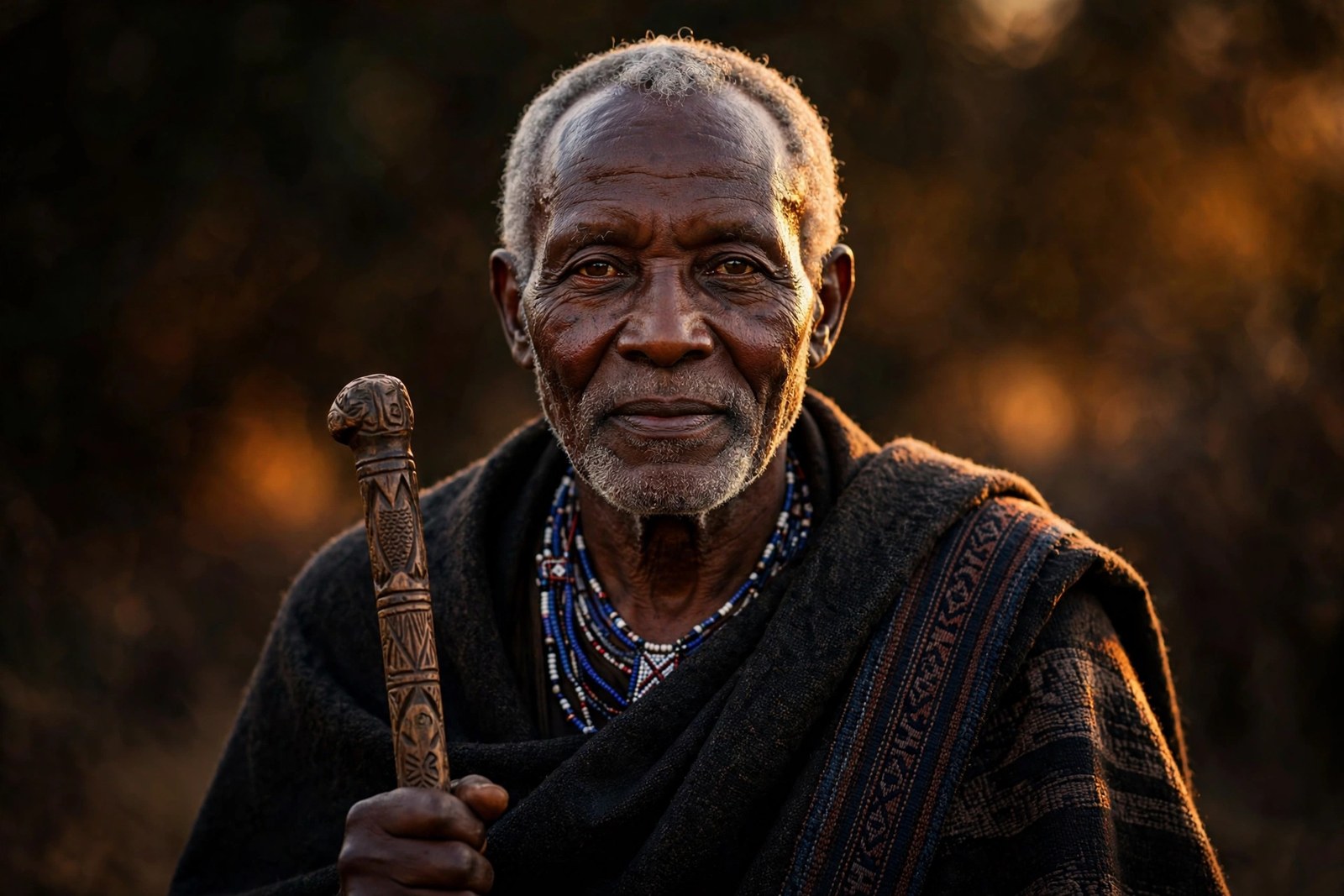
Among the Luo, a name is never random. It records the hour you arrived, the weather that morning, the season in the fields — so that any stranger, hearing your name, already knows the day you were born.
When a child was born, the grandmother would ask about everything around the birth — the season, the weather, the time of day and the very hour — and from those circumstances the name was chosen. Look at the pairs and you will see the pattern at a glance: a boy's name begins with O-, a girl's with A- — Otieno and Atieno, brother and sister of the same night. Today a child often carries a Christian name first, and then the Luo name that tells the story — the old clock still ticking inside the new name.
Read a Luo name and you can tell the time:
Here is the name-book of the people, gathered in The Roots of Homa Bay from the records of Mboya, from Ayodo’s Luo (1996), from the National Museums of Kenya and from the elders themselves. A boy takes the name with O-, his sister the same name with A- — and every name is a small record of the day of the birth. Find your own name: type it below, and see what your name remembers.
| The Birth | A Boy | A Girl |
|---|---|---|
| Born at night | Otieno | Atieno |
| Born in the morning | Okinyi | Akinyi |
| Born in the evening | Odhiambo | Adhiambo |
| Born in the rainy season | Okoth | Akoth |
| Born at harvest | Okeyo | Akeyo |
| Born in famine | Okech | Akech |
| Born in the dry season | Ooro | Aoro |
| Born in the weeding season | Odoyo | Adoyo |
| Born in prosperous times | Olomo | Alomo |
| Conceived before the mother’s periods had returned | Okumu | Akumu |
| First of twins | Opiyo | Apiyo |
| Second of twins | Odongo | Adongo |
| The child born after twins | Okello | Akello |
And the clock names above — Omolo of the early hours, Onyango of the morning, Ochieng’ of the high sun, Owuor of the deep night — belong to the same family of records. A Luo name is a document. It does not merely label a child; it testifies.
Twins receive their paired names in order: Opiyo / Apiyo, the first-born of the two, and Odongo / Adongo, the second — and the child who follows twins is Okelo / Akelo, the one who was "brought" after them. And names reach backward as well as forward: children are also named for ancestors, so the line of the family stays unbroken — tradition holds that an ancestor might even appear in a family member's dream, asking to be carried again. To hear a name called across the dala is to hear the family's whole history answering at once.
What does YOUR name say? If you carry a Luo name, you carry a small story of the day you came. Ask your grandmother — she remembers the weather.
Above the circumstance name stood a second, deeper naming. Between the birth and about the age of two, an ancestor might appear in a dream to someone in the family and ask for the child. The child then received that ancestor’s name — the juogi naming — and was expected to take the ancestor’s ways along with it: if the one who returned was quiet, the child would be quiet; if talkative, talkative. The family watched the child grow into the name.
And hear this law of it: only ancestors who had done good in life were believed to return so — children are rarely named after bad people. Sometimes a naming ceremony was held to ask, properly, whether a particular spirit had indeed come back in the child. So a name could be a homecoming: the family line, carried forward in a small body, greeted by name at the fire.
Twins were never an ordinary birth, and their names keep the order of their coming: Opiyo / Apiyo, the first of the two; Odongo / Adongo, the second; and Okello / Akello, the child who follows twins. Mboya, the great recorder of Luo custom, wrote plainly that in the old belief the birth of twins carried a spiritual weight the family did not take lightly — it was treated with special attention, and special prohibitions were laid upon the parents.
What exactly those customs were, here in Nyangweso, this house will not guess at. The book of this house says it honestly: the twin customs are an elders’ question — and when the elders of Nyangweso tell them, they will be written here in their own words. Some pages of the heritage are still being carried home.
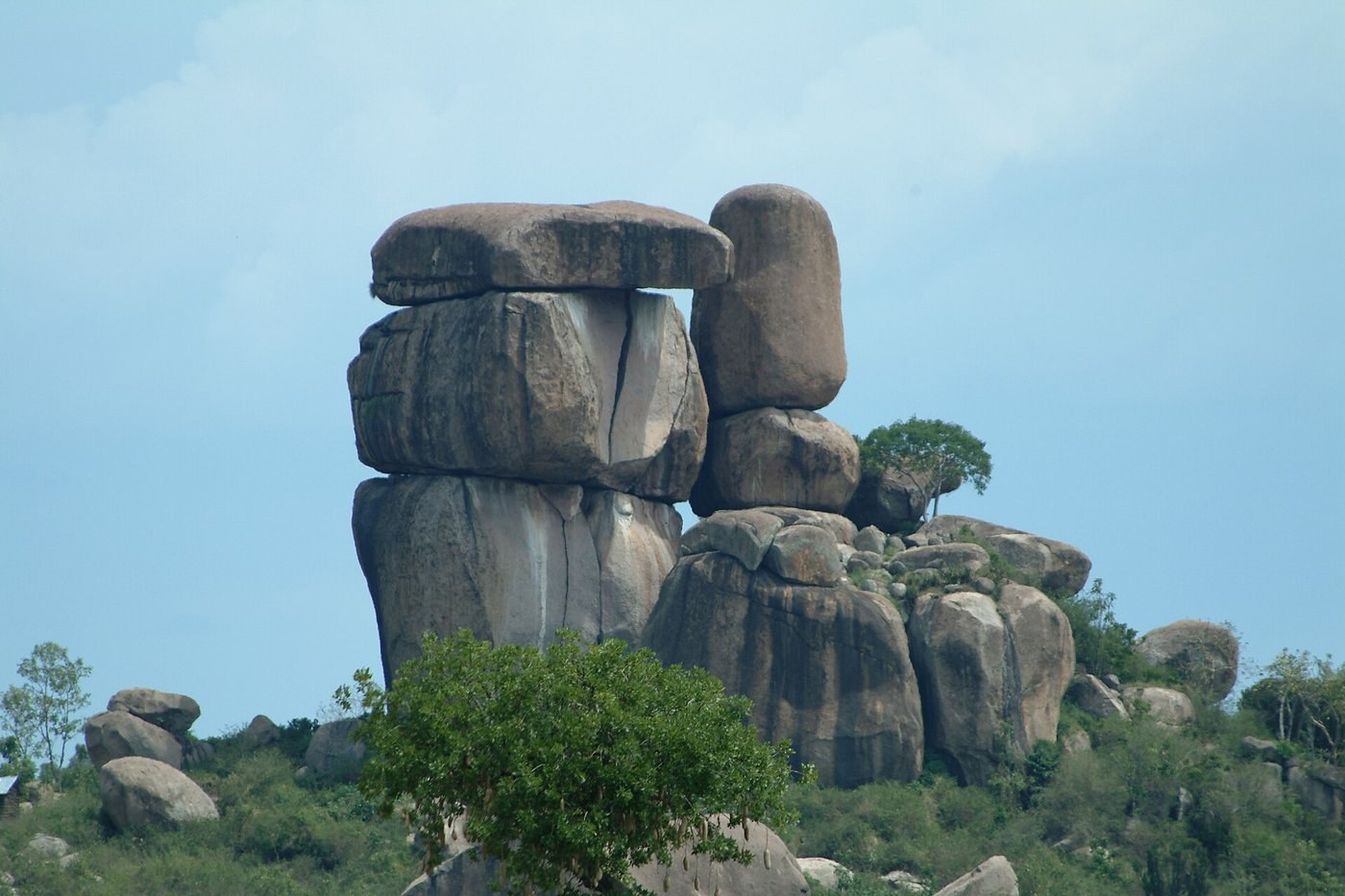
The names are not only on the children. They are written on the land itself. Kit Mikayi — “the stone of the first wife” — is a great granite tor standing in Seme, some twenty-nine kilometres west of Kisumu: outside Homa Bay County, but inside the same Luo world, and always treated by the people of this region as their own. The story says a man, Ngeso, loved the rock and spent his days beside it, and when people asked where he was, the answer came: he has gone to his first wife — to his Mikayi. The rock took her name, and keeps it to this day.
And look at the stones the way the people read them, and the legend explains itself: the great central rock is Mikayi herself; Nyachira, the second wife, stands at one side and Reru, the third, at the other; Ngeso is in the middle; and the smaller rock before them is the simba, the young men’s house. It is a dala, standing in granite — the Order of the Houses, carved by the land itself. Walk the Dala page of this house, then look again: you have seen this home before.